Working Hours: Mon–Fri 9:00–18:00 · Sat–Sun Closed
[email protected]
|
(647) 558-8723
1895 laid the first bricks on plenty of Brantford streets; 1946 put up plank-and-plaster cottages for returning factory workers; last spring poured a foundation somewhere off the Wayne Gretzky Parkway. Every one of those walls eventually needs a hand, and Brant County has all three still standing. IntraBuild reads the wall for what it is, backs and feathers the damage flat, and hands it back primed and ready for a roller. One written number before a blade touches the plaster.
Brantford didn't grow in one decade — it grew in layers. Brick rowhouses went up around Eagle Place and Holmedale before 1900, worker cottages followed once Cockshutt Plow and Massey-Harris were running war production through the 1940s, and West Brant kept spreading long after the Grand River last flooded downtown in 1974. Paris, a short drive west, still shows its cobblestone off Grand River Street. IntraBuild repairs drywall in every one of those layers — plus St. George, Burford, Scotland and the townships between. A hole gets backed and filled, a cracked seam gets stripped and re-taped, a stained ceiling gets cut to dry board — different tools for a different decade, same crew that hangs our new drywall installs when a wall's past saving. One number, agreed before we start.
Punch through a 1920s plaster wall in Holmedale and you're looking at horsehair and wood lath behind it; punch through a West Brant wall from last year and it's paper-faced gypsum. Either way we back it, layer the fill, and feather the edge flat.
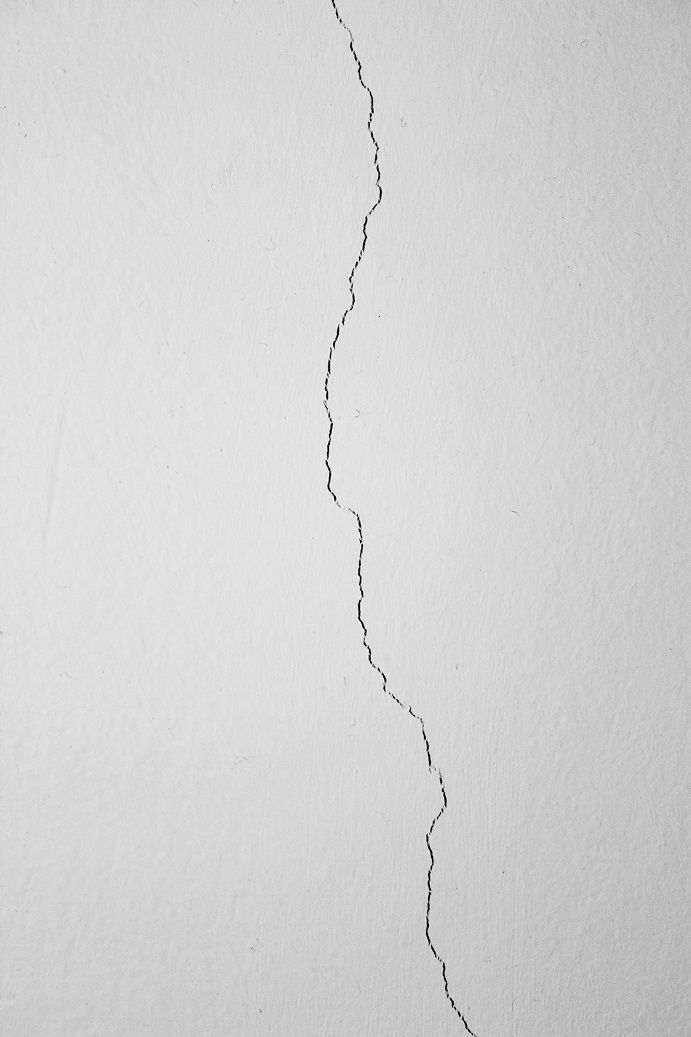
Century plaster over a Brantford doorway cracks along its own old fault lines; a nail pop in a five-year-old subdivision is a different animal entirely. We cut each one back to something solid, re-fasten or re-tape, and finish it flush.
Tape that bubbled decades ago finally shows through a repaint, or a joint separates as a newer build settles — the old tape comes out, mesh or paper tape goes back in, and fresh compound buries the line for good.
Low ground near the Grand River holds dampness longer than a hillside street ever would. Soft board gets cut to dry material, sealed with stain-blocking primer, and rebuilt overhead so the mark doesn't bleed back through.
Brantford's oldest streets were plastered before drywall existed as a product. That old lime coat moves with humidity in a way board never will, so a patch tied in without respecting it usually telegraphs through the paint within a season.
Cockshutt Plow and Massey-Harris were running wartime contracts, and the worker cottages that went up around the same years were framed for speed, not luxury. Thin walls in those cottages still move more than a well-built modern one.
After the Grand River flooded downtown Brantford in 1974, growth pushed uphill and outward. Those decades-old subdivision walls have long since finished settling, but their drywall joints and corner beads are due for the odd repair by now.
The newest streets across the river are still moving through their first few winters, and downtown units near the Laurier campus turn tenants over every fall — both are steady, ordinary sources of the patch calls we get now.
A wall doesn't get charged extra for being old, and a new one doesn't get a discount for being young — the number is set by what the repair itself needs, from a five-minute nail pop to a ceiling cut back to dry board. As a guide, expect $120–650 per repair depending on tier, with a service-call minimum of $500, before HST. Match the tier to the damage below.
| One small patch, any wall | $120–200 |
|---|---|
| A backed hole or reworked corner | $220–380 |
| A ceiling cut back and sealed | $350–650 |
| A whole room, top to bottom | quoted on site |
The fill, the tape, the sanding, the prime coat — that's what's baked into the number, whatever decade the wall dates to. Nothing extra for reaching Paris or the far townships. On its own, a single repair usually sits close to that $500 floor. Read these as a guide before HST; the confirmed figure comes once we've actually seen the wall, or your photos of it.
Brick homes near the old Eagle Place industrial blocks still carry their original plaster under later drywall patches — the two materials meet in odd places, and knowing exactly where keeps a new repair from standing out as a flat square.
Worker cottages built quickly in the 1940s for plow and tractor plant staff have thin, plain walls that still take a nail pop or a settling crack more readily than a modern build — small, honest repairs, done often.
Paris's downtown cobblestone buildings hide interior plaster that needs a patient hand — matching an old texture, working carefully around original trim, and finishing so the repair reads as part of the wall rather than a modern patch dropped in.
Streets built across the river in the last few years are still settling into their frames — the same hairline crack over a doorway that a resale inspection flags is usually the first repair call a new owner makes.
Homes sitting closer to the Grand River hold ground moisture longer after spring melt than a hillside property ever would, and a faint stain low on a basement wall is often the first sign of it — worth a look before it spreads.
Flood-proofing work — a backwater valve, a sump pump upgrade — often means a plumber cuts a clean opening in a basement wall first. Once their part's done, we're usually the ones closing it back up properly.
Downtown apartments near the Laurier Brantford campus turn over every fall, and the run-up to a new lease brings a steady list of hallway scuffs and closet holes that need patching before the next tenant walks through.
Farmhouses out past Burford, Scotland and St. George were plastered generations before drywall existed, and their cracks travel in long, uneven lines instead of tidy corners — a repair has to work with that pattern, not fight it.
Booking doesn't rank a one-hole patch below a bigger renovation job — a crack near downtown Brantford gets the same fast slot as a full ceiling repair, because most people calling want it handled this week, not next.
The sander pulls its own dust into a canister as it works, and sheeting goes up around whatever we've opened — a rule that hasn't changed whether the house is a century Eagle Place brick or a West Brant build finished last spring.
You get the figure before a tool comes out, not after, whether the job's in Brantford, Paris or one of the townships — a fully insured crew doing the cutting either way.
Every repair leaves sanded and primed, waiting on a roller. A landlord racing a September turnover near Laurier, or a homeowner who'd rather not colour-match a century wall themselves, can just hand that step to our painting crew.
Text over clear shots of the damage, or book a visit outright — either way, most repairs get a tier and a price before we've loaded a single tool into the truck.
Furniture shifts clear, floors get covered, and poly goes up around the work zone so dust and debris never leave the room once the first cut starts.
Whatever's damaged — board, plaster, lath — gets cut away until what's left is solid, then backed with fresh board, mesh or framing strong enough to hold the fill.
New material goes into the opening, seams get taped with mesh or paper, and the first pass of compound goes on over top.
Thin coats build up wide past the repair's edge, then get sanded down until running a hand across the wall gives nothing away.
A stain-blocking primer goes on where the damage warrants it, we walk the finished patch with you, and the wall's ready for a roller that same afternoon.
Most Brant County repairs clear all six stages the same day — a stubborn old plaster wall or a soaked ceiling can need a short return trip once the compound's fully cured. Either way, the same crew sees it through.
Most jobs land between $120 and $650 depending on tier, with a service-call minimum that scales with the job, before HST — a small patch sits at the low end, a water-damaged ceiling section at the top. Send photos or book a visit for the exact written number.
We repair the drywall itself; the water source and any insurance claim sit with your insurer, plumber or a waterproofing contractor. We can supply dated photos and a written scope of the repair if your claim needs documentation, but we don't file claims directly.
Yes — this is a common follow-up call after flood-proofing work. Once the plumbing side is finished, we back the opening, tape it, and finish it flush so there's no trace it was ever cut.
It can, if the source isn't actually solved first — grading, a sump pump, a backwater valve. We'll always flag when a stain looks like a repeat issue rather than a one-off, so you're not just patching the same spot twice.
Generally, yes — a wall gets fixed from the floor, a ceiling needs a platform or bracing set up first, and that extra setup tends to add roughly a quarter to a third onto what the same repair would run on a wall.
In most cases, yes. We feather the compound well past the damage and texture-match the surface — knockdown, smooth or otherwise — so the repair reads as part of the original wall once it's painted, not a flat square dropped into an old surface.
The repair itself is left primed and paint-ready, but colour and painting sit outside that price. If you'd rather the patch disappeared completely, our interior painting crew can blend it in the same visit.
A handful of holes or one stubborn seam still belongs in the repair column — quicker, and cheaper too. But a wall that's failed in a dozen spots across a century, or a ceiling that's more damage than board, tips into re-board territory. Our drywall installation service typically prices out close to what all those individual patches would have anyway, minus the repeat visits.
Drywall repair isn't limited to Brant County — IntraBuild works right across the GTA and Southern Ontario, all on one written per-square-foot price with no separate travel fee.
Whatever decade your wall was framed in — 1895 brick, a 1940s worker cottage, a West Brant build from last spring — send a few photos of the damage and IntraBuild will size it to a tier and reply with a written price, usually inside 48 hours. Small jobs are genuinely welcome, and nothing gets cut before you've seen the number.
Get a free quote