Working Hours: Mon–Fri 9:00–18:00 · Sat–Sun Closed
[email protected]
|
(647) 558-8723
Stand in the foyer of an Aurora Highlands two-storey and the punch list writes itself: a scuff where a bench used to sit, a hairline crack over the archway, a faint halo under the pot light where a picture hook came out. IntraBuild works down that kind of list room by room — closing each item quietly, feathered and sanded until the wall reads as one surface — before handing it back primed and ready for paint. A written price arrives before we touch a single spot on it.
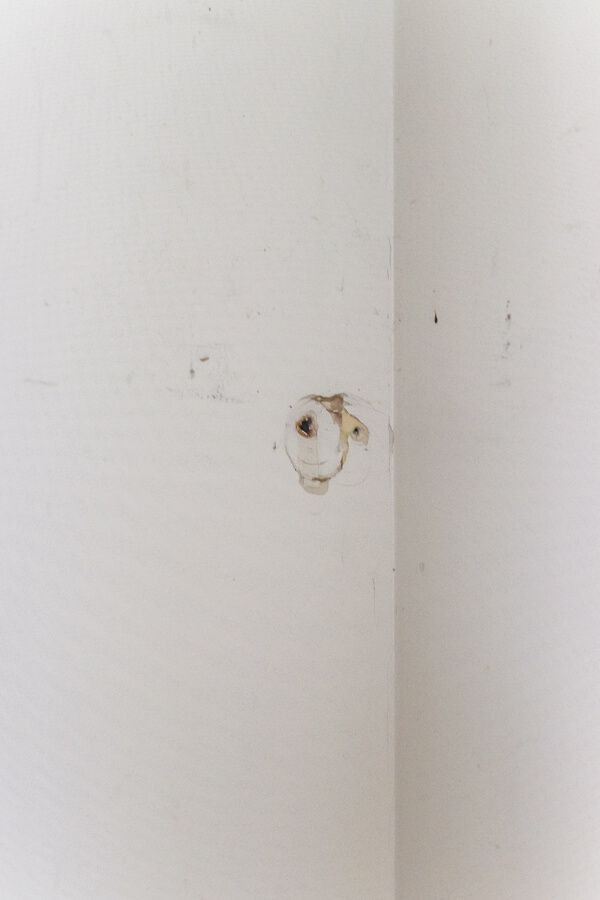
Walk a hallway near Yonge and Wellington slowly and a house tells you what it needs — a nick by the light switch, a seam ghosting through paint, an anchor hole from art that's since moved rooms. We go through that list one item at a time: cut back to sound material, backed properly, filled in thin layers and feathered until nothing catches the eye. Same insured crew that hangs our new drywall, so when re-boarding would genuinely serve a room better, we say so directly rather than add one more line item.
Two-storey foyers and open stairwells around Aurora Highlands and the Hills of St. Andrew put a wide, unsupported run of drywall over a single span. The line near the top gets cut back to sound material, properly backed, and finished flush without a trace of scaffolding in the result.
Century homes along Yonge and Wellington often carry an original plaster ceiling meeting a later drywall wall from a past addition, and the join between the two rarely behaves the same. We work with what's actually there instead of forcing one material to act like the other.
Art relocated to another wall, a wall-mounted shelf that finally gave way, a coat hook nobody uses anymore — each old hole is backed, built up in thin layers, and feathered until it's gone under even, considered light.
An old flashing detail, or a slow leak from the bathroom above, leaves a quiet ring on a plaster or drywall ceiling. That section comes out down to solid material, gets a coat of stain-blocking primer, and is rebuilt before the mark has a chance to travel any further.
A two-storey entry or an open great room puts more span across a single piece of drywall than a standard-height room does. More flex means more places for a hairline line to begin.
Homes near the heritage core settle differently than anything built recently — plaster and lath crack in their own map-like pattern, distinct from drywall, and worth reading correctly before the first cut.
Bigger estate footprints in Bayview Wellington and Country Lane Estates can shift unevenly across their span, and a hairline over a doorway a few years after building is a normal, patchable outcome of that.
A heritage restoration or an addition from years back can leave an access panel, an old wiring hole or a mismatched patch behind — one more item added to the list, closed to match what surrounds it.
Pricing follows what each item on the list actually takes — a small hole closed flush, a foyer crack needing fresh backing, or a heritage ceiling stain cut back and sealed. Figure $120–650 per repair depending on tier, with a service-call minimum of $500, before HST. Match each item to a tier below; a cost table follows for the whole list.
| Small anchor hole or hairline mark | $120–200 |
|---|---|
| Foyer crack or larger hole, backed | $220–380 |
| Heritage or plaster-era ceiling section | $350–650 |
| Whole rooms / full skim | quoted on site |
The number quoted for each item already folds in the patch, the tape, the sanding and a prime-ready finish, with nothing tacked on afterward. A lone anchor hole or hairline mark usually sits right at the $500 floor. Treat these as before-HST estimates — the free written quote is what actually locks the total in, once photos or the home have been seen.
The tall foyers and vaulted great rooms common on these streets carry more open drywall span than most homes, and that's where the majority of height-crack items concentrate — patched with proper backing, not a quick surface fill.
These newer estate streets haven't finished their first cycle of settling yet, and a hairline above a bedroom door, or a slight gap where a ceiling meets a wall by year two or three, is ordinary movement that patches cleanly.
Century homes closest to downtown Aurora often still carry original plaster ceilings meeting later drywall additions — worth recognizing when drywall is the right patch material and when the plaster itself is worth keeping intact.
South of the newer estate streets, Aurora Heights' more modest family homes call in the everyday items — a doorknob hole, a scuffed corner — closed with the same careful patch as anything on a grander street.
A home going to market still deserves a proper, feathered repair rather than a rushed fill. A short list of anchor holes and scuffs can often be closed inside the 48-hour quote window when a listing date is already set.
A general contractor wraps a kitchen or bath project and moves on, leaving the drywall as someone else's problem — the openings get closed and the new board blended into the old, so whoever paints next is working on a wall that's genuinely done.
Even a carefully built estate home can develop a nail popping loose within its first year or two — barely noticeable under fresh paint until the afternoon sun crosses it. We re-set the fastener, re-tape and feather the spot so it stays gone through the next repaint too.
An alarm code, a nanny's routine, a specific quiet-hours window — restoration and estate-home clients often need a visit built around the household, and access questions go on the list before a date ever does.
Codes, a preferred window of the day, whether someone needs to be home — all of it gets confirmed before a date is set, so the visit doesn't take up more of your day than the items themselves need.
Period trim, hardwood floors and plaster mouldings are covered before the first cut, and sanding runs through a vacuum-fitted tool wherever the room allows it, so older finishes never sit at risk.
Every item is costed and confirmed in writing before we start — no additions once a wall's been opened — and the work itself is done by the insured crew responsible for our new drywall builds too.
Every patch is sanded smooth and primed, ready for your painter — or ours. Where a heritage colour or a particular sheen matters, our painting crew can blend it in during the same visit.
A few clear photos of each item are usually enough to size a repair to a tier and price the whole list before a tool is ever picked up.
Floors, trim and furniture near each spot get covered, and drop sheets go down before the first cut into any of them.
Damaged board or plaster is opened up until only solid material remains, then reinforced — backing board, mesh, or fresh framing behind it — giving each patch a real base to sit on.
Each opening gets its board or filler, joints are taped in mesh or paper, and compound goes on in the first of several passes.
Compound goes on thin, coat after coat, spread wider at the edge than most patch jobs bother with, then sanded back until nothing reads under a steady light.
Anywhere moisture played a part gets a coat of stain-blocking primer, the whole list gets walked through together, and every wall stands ready for its first coat of paint by the time we leave.
A single visit is usually enough to work through every stage on the list — a heritage ceiling item is the exception, sometimes wanting a brief return trip once the compound's fully cured. Whichever it is, the crew that opened the wall is the one that closes it.
Items typically run $120 to $650 depending on tier — a small anchor-hole patch at the low end, a stained ceiling section at the top — with a service-call minimum that scales with the job per visit, before HST. A free written quote from photos or a visit prices the whole list exactly.
Yes — flag codes, quiet hours or a preferred window when you book, and the visit gets built around it rather than the other way around.
Yes — period trim, hardwood and plaster mouldings are covered before anything starts, and sanding runs through vacuum-fitted tools wherever the room allows it, so older finishes stay out of harm's way.
Yes — pre-sale lists go on a fast-turnaround schedule, and coordinating directly with an agent, a stager or a property manager is routine if you're not on-site.
A typical list — patches, cracks, nail pops — gets cut, backed, taped, feathered, sanded and primed in one sitting. Something larger, or an item that genuinely needs the compound to cure fully, is the exception that adds a brief second stop.
Yes — a plaster ceiling can be patched directly, or transitioned cleanly to drywall where a past addition already made that switch, with texture matched so the seam between the two doesn't read once it's painted.
Generally, yes — overhead work takes longer and often calls for a platform or bracing, which puts ceiling items roughly 20–30% above an equivalent item on a wall.
When the damage stays in one or two places — a couple of holes, one failed seam, a single ceiling mark — patching remains the quicker, cheaper route. Once a room is already being restored, or water's reached most of a ceiling, our drywall installation crew can often re-board it for close to the same money, with a cleaner result at the end.
Drywall repair isn't limited to Aurora — IntraBuild works right across the GTA and Southern Ontario, all on one written per-square-foot price with no separate travel fee.
A homeowner in the Hills of St. Andrew once pointed to a hairline crack near the top of her foyer — three years old, painted over twice, never actually closed. One visit later: backed, feathered, primed, done. That's usually how it goes — send a photo of what's on your list, and IntraBuild sizes it to a tier and replies in writing, most often well inside two days. Asking costs nothing, and there's no push to commit.
Get a free quote