Working Hours: Mon–Fri 9:00–18:00 · Sat–Sun Closed
[email protected]
|
(647) 558-8723
Milton's newest streets are barely past their tenth birthday, and a lot of the drywall on them is still finishing its first move — truss-lift cracks over closet doors, nail pops working loose through a builder-grade coat, seams that got three quick passes instead of four. IntraBuild patches what the build schedule left thin: backed properly, taped, feathered, sanded, and primed to match whatever colour you're on now. A written price arrives before we touch a wall that might still technically be under warranty — and we'll tell you honestly if it likely is.
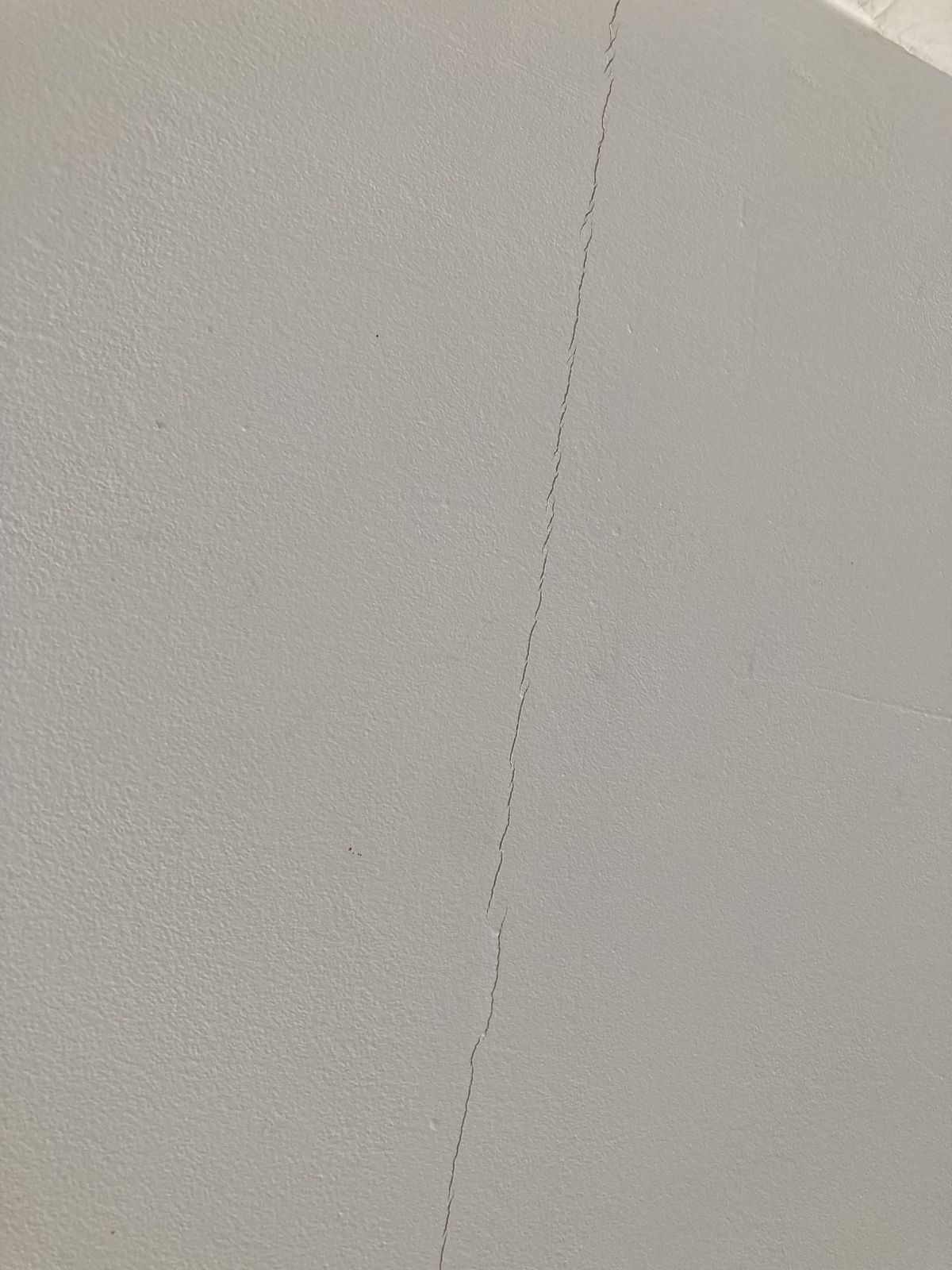
"Is this a warranty thing, or do I just deal with it?" We hear some version of that question on almost every Milton call. The honest answer: Tarion's one-year form covers some settling, not all of it, and by year two most of what's cracking is yours to fix regardless of who built the house. IntraBuild patches what's left — a truss-lift crack over a bedroom door, a nail pop through a builder-grade coat, a basement cut-out nobody closed — filled, taped, feathered and sanded until it disappears, then primed to match. One written price, agreed before anything gets cut, warranty or not.
Most of what we patch behind a bedroom door is exactly that — a toddler's toy, a moving-day mattress corner, a dolly that clipped the hallway. Backed, filled in layers, feathered until it's gone from a young family's busiest wall.
Because the first patch probably wasn't backed. Truss lift opens the same hairline every heating season until it's cut back to sound material, re-taped properly, and finished flush — then it stays closed.
A tight handover schedule sometimes means three coats where four were needed. Old tape comes off, new mesh or paper tape goes on, and the seam gets buried under fresh compound instead of another coat of paint that won't fix it.
Left alone, yes. A sump backup, an upstairs overflow, a slow roof leak — the soft board is cut back to dry material, sealed with a stain-blocking primer, and patched or re-boarded before it gets worse.
Roof trusses keep settling well past possession — a crack over a closet or bedroom door by year two or three is the truss finding its resting position, not a defect. It patches cleanly once it's stabilized.
A tight closing date doesn't always leave room for a fourth coat of compound. Thin original mudding tends to show its seams a few years down the line, especially under low winter light.
New builds are sealed tighter than older housing stock, so indoor humidity swings more between a damp summer and a dry Ontario winter — and drywall joints move with it more than most owners expect.
Most Milton basements are unfinished at closing. An electrician's or HVAC tech's access cut-out from that later renovation is one of the most common calls we get, closed properly instead of hidden behind a shelf.
What you'll pay depends on what stage of settling the house is at — a nail pop patched in minutes, a truss-lift crack that needs fresh backing, or a basement ceiling stain cut back and sealed. As a guide, plan on $120–650 per repair depending on tier, with a service-call minimum of $500, before HST. Match the damage to a tier below; the job-by-job table follows.
| One nail pop or hairline crack | $120–200 |
|---|---|
| Truss-lift crack, backed & retaped | $220–380 |
| Water-stained basement ceiling | $350–650 |
| Whole rooms / full skim | quoted on site |
Every price covers the patch, the tape, the sanding and a prime-ready finish — no separate charge for the drive. One nail pop or hairline crack usually sits close to the $500 minimum. These are guide figures before HST; a free written quote sets the exact number once we've seen photos or the house.
It went up fast, and most of its homes are still inside their first settling cycle. A hairline crack over a bedroom door or a gap at a ceiling line by year two is normal here — and we see it on repeat through the whole subdivision.
Off Louis St. Laurent, truss uplift shows up most over closet and bedroom doors as roof trusses shift with the seasons. A properly backed patch holds through the movement better than a quick surface fill ever will.
Streets like Timberlea and Beaty are now fifteen-plus years in, and the original builder-grade paint and thin mudding are finally showing the nail pops and seams that never got addressed at handover.
More seams packed into less wall, plus shared party walls, means Milton's newer townhome blocks generate the most seam-failure calls we get — re-taped and feathered so the block reads as clean as the day it was built.
The first two weeks in a new Milton build are usually the roughest on drywall — movers, deliveries, a dolly clipping a hallway corner. We're often the very first repair call a new homeowner makes.
A lot of settling cracks fall under what a one-year warranty form treats as normal movement, not a covered defect — leaving the homeowner to patch it themselves. We see this call spike every fall, right around the warranty-form deadline.
Unfinished basements get finished within a few years of closing, and the electrician's or HVAC tech's cut-out from that project is often left for someone else. We close it flush before the room's considered done.
A toy truck through drywall, a headboard that scuffed a corner — young families make up a big share of our Milton calls, and a kid's-room repair gets exactly the same care as a formal living room.
A single crack over a closet door doesn't sit behind bigger renovation work on our schedule — repair calls get their own fast turnaround, because most new homeowners want it gone before the next inspection or open house.
New carpet, fresh vinyl plank, barely-lived-in trim — we section off the work area with poly and sand with vacuum-attached tools wherever we can, so a repair doesn't grind dust into flooring that's still new.
It doesn't change the price without a conversation first — every repair is priced and agreed before we start, carried out by the same fully insured crew that builds our new drywall installs.
If you kept the paint code from closing, yes — we'll match it so the repair blends straight into the original wall, or match from a sample if the code's long gone.
A few clear photos are usually enough to size the repair to a tier and send a written price before a tool ever leaves the van.
Fresh flooring, trim and furniture get protected, poly seals the work area, and drop sheets are down before the first cut.
Whatever's cracked or soft is cut back until what's left is sound, then backed with board, mesh or fresh framing so the patch holds through the next settling season.
New board or filler goes in, seams get mesh or paper tape, and the first coats of compound go on — this is the step the last patch probably skipped.
Compound builds in thin coats and feathers wide, then sands smooth until the patch is impossible to find by hand or by eye.
A stain-blocking primer goes on where needed, colour-matched if you've got the code, and we walk the repair with you before we leave.
Most repairs clear all six stages in a single visit — a water-damaged ceiling might need a short second trip once the compound's cured. Either way, the same crew closes what it opened.
Most repairs run $120 to $650 depending on tier — a small nail-pop patch at the low end, a water-damaged ceiling section at the top — with a service-call minimum that scales with the job, before HST. A free written quote from photos or a visit sets the exact number.
That depends on your home's age and your Tarion form — a lot of settling cracks are treated as normal cosmetic movement rather than a covered item once you're past year one. We're not the ones who make that call, but we'll patch it properly either way.
We section the work area off with poly and sand with vacuum-attached tools wherever we can, so fresh carpet or vinyl plank doesn't end up with compound dust ground into it.
Most patches, cracks and nail pops finish in a single visit — cut, backed, taped, feathered, sanded and primed the same day. Anything needing full cure time between coats might need a short second stop.
If you kept the code from closing, yes — sheen and colour matched so the patch blends straight in. Without a code, our painting crew can colour-match from a sample instead.
Usually, yes — working overhead is slower and often needs bracing or a platform, so ceiling repairs typically run 20–30% above the same repair on a wall.
The patch itself is left primed and paint-ready, but a full repaint isn't in that price. If you'd rather have the whole room refreshed at once, our painting crew can pick it up the same visit.
If the damage is contained — a few cracks, one failed seam, a single ceiling stain — repair is faster and cheaper. Once a basement's being finished from scratch or a room has damage in several spots, full re-board through our drywall installation service usually costs about the same and leaves a cleaner result.
Drywall repair isn't limited to Milton — IntraBuild works right across the GTA and Southern Ontario, all on one written per-square-foot price with no separate travel fee.
A crack over a door, a nail pop, a scuffed corner from moving day — send a photo and we'll size it to a tier. Written price back inside 48 hours, warranty or not. Book it, or don't — either way you'll know what it costs.
Get a free quote