Working Hours: Mon–Fri 9:00–18:00 · Sat–Sun Closed
[email protected]
|
(647) 558-8723
January ice sits along the roofline while a homeowner near Allandale notices a new ring on the bedroom ceiling. April brings six units near Georgian College that need patching before new tenants collect keys. By July cottage traffic crawls up the 400, and a foyer wall off Mapleview still carries a crack from the subdivision's first winter. October means one more pass before the snow returns. IntraBuild moves through Barrie on that same clock — cutting back ice-dam stains, turnover scuffs and settling cracks, then feathering and sanding each one flat before priming it for paint. A written price lands before the first cut, whatever month it happens to be.
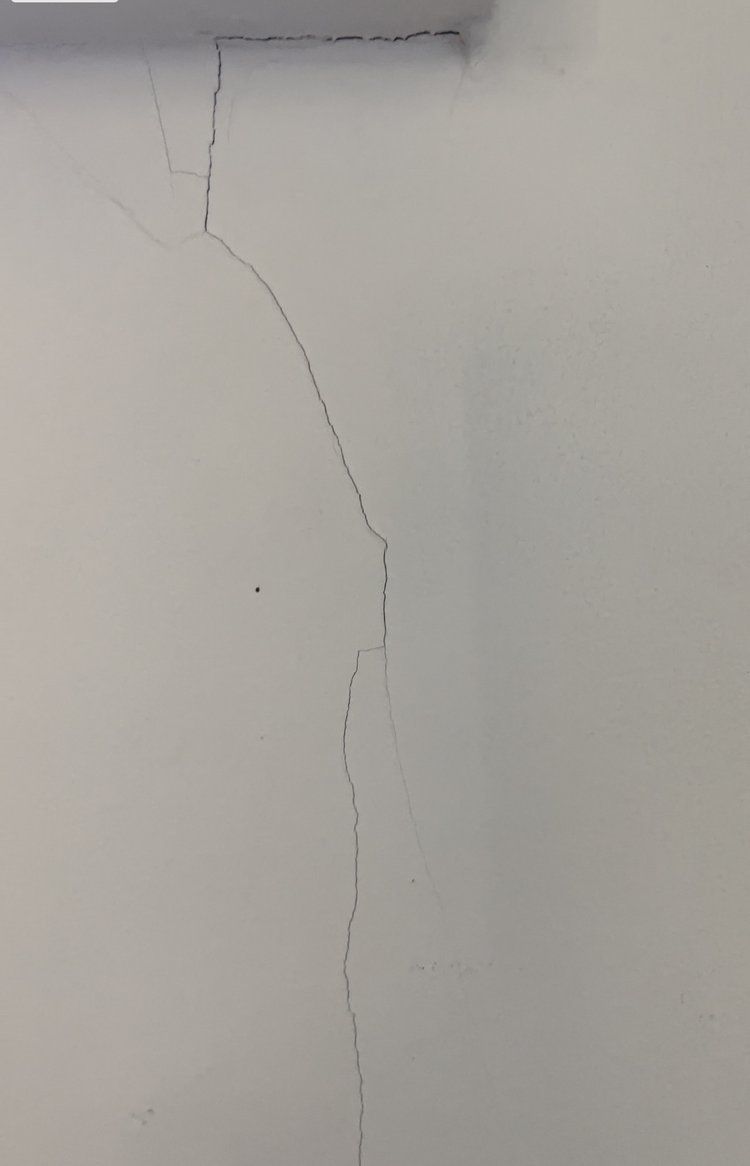
Ask what's booked some Tuesday morning and the answer changes with the calendar. February: a homeowner near Painswick spots a mark that wasn't there at Christmas. May: a property manager near the college needs a dozen holes closed before new leases start. September: a crack over a doorway on a two-year-old street finally gets noticed once the movers are gone. IntraBuild works every one of those calls the same way — cut back, backed, taped, feathered and sanded until the repair is gone, then primed for paint regardless of the forecast. One written price, settled before anything opens up.
Meltwater backs up under the shingles most winters and finds the same weak spot on a bedroom or hallway ceiling. We cut back to dry board, seal it with a stain-blocking primer, and rebuild the section before the next thaw repeats the pattern.
A landlord near Grove Street or the college turns over a handful of units twice a year, and every lease change leaves anchor holes, scuffed corners and the odd dent behind a door — matched to the unit's paint before the next tenant collects keys.
Newer streets toward Painswick and Holly are still settling into their foundations, and a hairline crack above a bedroom door in year two or three is that process finishing, not a flaw. Cut back, re-backed and finished flush so it doesn't reopen next January.
A home near the lake left shut through the colder stretches swings harder between damp and dry than one lived in daily, and a joint separating while nobody's watching is a common enough find — stripped, re-taped with mesh, and buried under fresh compound.
Barrie roofs carry more lake-effect snow than a lot of Southern Ontario, and when it melts unevenly, water backs up under the shingle line and finds the ceiling below — the usual explanation behind a spring stain.
South-end subdivisions toward Big Bay Point are only a handful of winters old in places, and the framing is still settling into a resting position — a crack over a door a year or two after possession is that process, not a defect.
Units close to Grove Street change hands close to twice a year, and that turnover means more anchor holes, more scuffed corners and more doorknob dents than a home that's owned and lived in long-term.
Homes closer to Kempenfelt Bay see bigger swings between a humid spring and a dry winter than homes further inland, and drywall seams move more with that swing than most owners expect.
What a repair costs here often comes down to which month it showed up in — a fast fill on a turnover hole, a settling crack that needs proper backing, or a thawed-out ceiling that has to be opened and sealed. Plan on $120–650 per repair depending on tier, with a service-call minimum of $500, before HST. Pick the tier closest to the damage below; a job-by-job table follows.
| A single turnover hole | $120–200 |
|---|---|
| A settling crack, backed properly | $220–380 |
| A thawed-out ceiling section | $350–650 |
| Whole rooms / full skim | quoted on site |
Every price covers the patch, the tape, the sanding and a paint-ready finish, with nothing extra tacked on for the drive across town. A single repair usually lands close to the $500 minimum. These are guide figures before HST — a free written quote fixes the real number once we've seen photos or the property.
Steeper, older rooflines near Allandale and downtown don't shed snow as cleanly as newer construction, and that's where our thaw-season ceiling calls cluster hardest.
These south-end streets are only a few winters past possession in spots, and the settling cracks that come with a new build are still working their way out of the drywall.
Properties near the college change tenants close to every spring and late summer, and the scuffed corners and anchor holes that come with it are steady, predictable work each time.
Homes closer to Muskoka cottage traffic often sit empty between visits, and a seam or crack that opened while nobody was watching gets found and closed properly on the next trip through.
The same wave lands every spring — a stain that formed over the winter, finally visible once enough snow has cleared to see how far it spread.
Landlords near the college call on a tight window between move-out and move-in, usually a few weeks each spring and again in late summer, needing several units patched and paint-ready fast.
South-end owners often call around the twelve-month point, once a full seasonal cycle has opened a crack over a door or a gap where a wall meets the ceiling.
Owners near the bay often take on a basement project soon after buying, and the cut-outs an electrician or plumber left behind get closed flush before the room is called finished.
A single mark or a rental on a tight turnover deadline doesn't sit behind bigger renovation jobs on our board — repair calls run their own fast lane, in season or out of it.
The room gets sectioned off with poly first, and sanding runs through a vacuum-fitted tool whenever the job allows it, so the rest of a home or unit isn't left dusty regardless of what's happening outside.
The price is set on paper before work starts — nothing added once the wall's open — and every job is carried out by the same insured crew, spring through the depths of winter.
Every patch leaves sanded and primed. A landlord with a standard unit colour can have the whole thing blended into the wall the same visit, no separate booking required.
A few clear photos, whatever the weather's doing outside, are usually enough to size a repair to a tier and put a number in writing before a tool leaves the truck.
Furniture and flooring get protected and poly goes up around the work zone first, so nothing beyond the repair itself is at risk once the cutting starts.
Whatever's soft, cracked or stained comes out until what's left is solid, then gets backed with board, mesh or fresh framing underneath.
New board or filler goes in, the seams take mesh or paper tape, and the first coats of compound go down over top.
Compound builds thin, coat over coat, feathered out further than most patch jobs bother with, then sanded until nothing catches the light.
A stain-blocking primer goes on anywhere moisture was involved, we walk the result with you, and the wall's ready for paint that same afternoon.
Most jobs clear all six steps in a single stop — a ceiling that took on real water sometimes needs a short second visit once the compound's had time to cure. Either way, it's the same two hands finishing what they started, whatever the season.
Repairs typically land between $120 and $650 depending on tier — a small patch at one end, a rebuilt ceiling section at the other — plus a service-call minimum that scales with the job, before HST. Photos or a visit gets you an exact number in writing.
Usually, yes, if it's roughly the same spot each year. We repair the drywall itself; the roof or attic-insulation issue causing the ice dam is a separate job for a roofer, or the ring comes back next winter.
Sometimes, depending on the cause and your policy. We can put together photos and a written scope of the drywall portion for a claim, but filing and negotiating with the insurer isn't something we do ourselves.
Yes — we'll shoot the stain or soft board before anything's opened up, which tends to be exactly what an adjuster wants to see if a claim's already underway.
Most patches, cracks and nail pops are cut, backed, taped, feathered, sanded and primed inside a single stop. A ceiling needing full cure time between coats might need a short second one.
Yes — landlords near the college regularly book us for a batch of units ahead of a move-in date, and we'll quote the whole group from photos to fit a tight window.
Generally — working overhead takes longer and often needs a platform or bracing, so ceiling repairs tend to sit 20–30% above the same job done on a wall.
If the damage sits in one spot — a hole, a cracked seam, a single ceiling mark — patching wins on cost and speed. Once a unit's carrying years of turnover wear or water damage across most of a ceiling, full re-board through our drywall installation service usually costs about the same and leaves a cleaner result.
Drywall repair isn't limited to Barrie — IntraBuild works right across the GTA and Southern Ontario, all on one written per-square-foot price with no separate travel fee.
A ceiling ring from last week's thaw, a rental that needs turning around before the next lease, a crack that opened sometime over the winter — send a few photos and we'll size it to a tier, usually with a written price back inside 48 hours. Small jobs are genuinely welcome, any time the calendar throws one at us. Free to ask, no pressure to book.
Get a free quote