Working Hours: Mon–Fri 9:00–18:00 · Sat–Sun Closed
[email protected]
|
(647) 558-8723
IntraBuild works London's drywall around the academic calendar as much as around the plaster itself: May exit inspections, a scramble of turnover patches through late summer, and September lease-start walkthroughs where a hole behind a bedroom door has to disappear before a new tenant sees it. The same crew handles the quieter, century-old walls of Old North and Wortley Village on the other side of town, where lath and plaster crack on their own schedule, plus every ordinary family repair in between. Every patch gets filled, feathered and sanded flush, then primed and left ready for paint. A landlord with a five-unit punch list gets the same written price, agreed before we touch a wall, as a homeowner with one hole to fix.
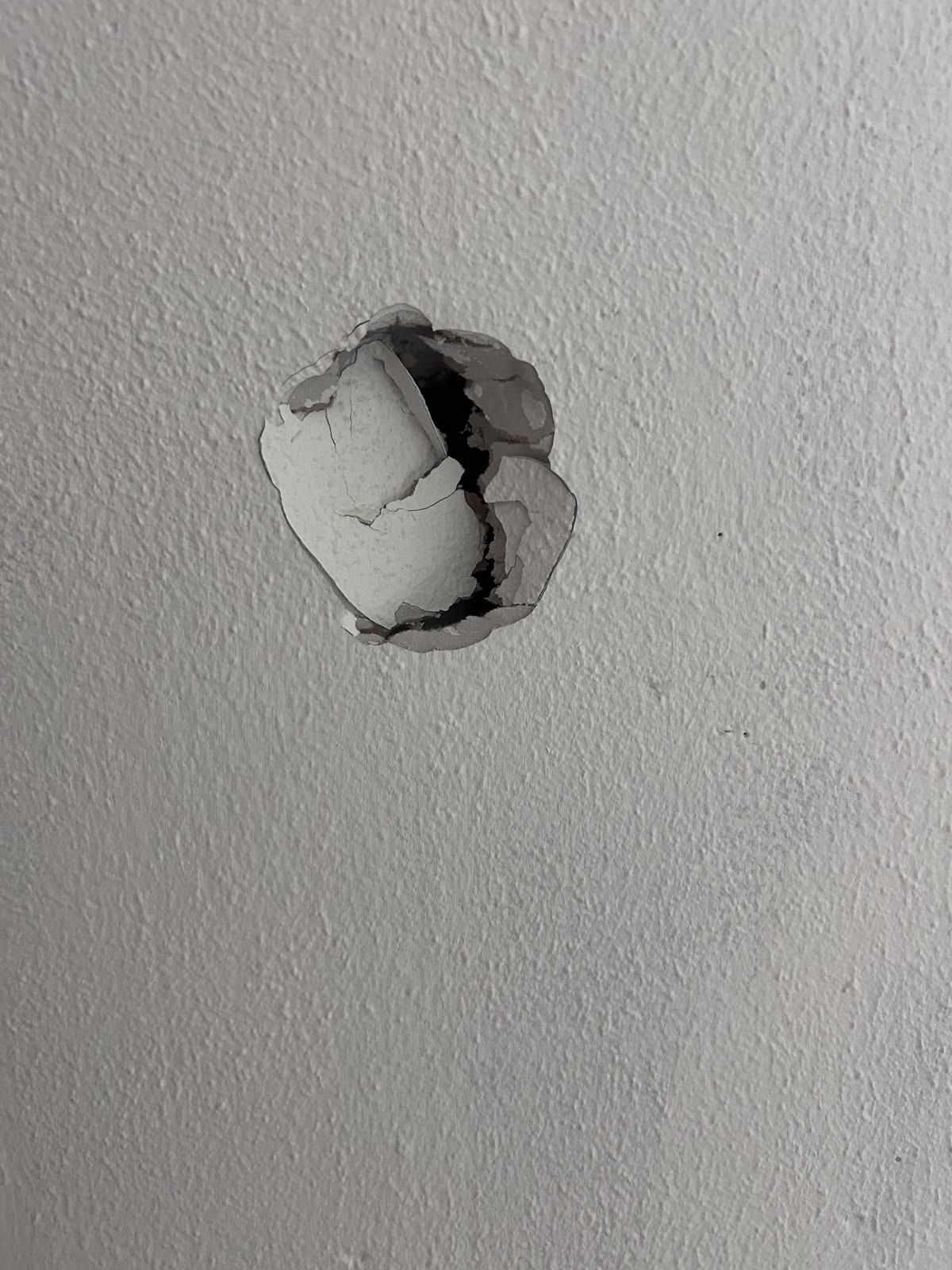
By 8am on a September Saturday our patch crew has usually already been through three London houses before lunch — a scraped stairwell in Broughdale, a punched door panel near Fanshawe, a hairline crack over an Old North doorway that's sat there since spring. IntraBuild works to that same clock the rest of the year too: holes, cracks, failed tape seams and water-stained ceilings get filled, taped, feathered and sanded until the patch disappears, then left primed for paint. It's the same insured crew that hangs our new drywall installs, so a wall better off re-boarded than patched stays honest advice instead of an upsell. One written price, agreed before anything gets cut.
A door handle punched through a bedroom wall, a hallway corner worn through by hauled furniture, a closet door that didn't survive packing week — filled, backed and feathered before the next tenant's walkthrough, most in a single visit timed to your turnover date.
Four or five tenants under one roof push more slammed doors and foot traffic through a wall than it was built for. Old tape bubbles or peels first along hallway ceilings; we strip it back, mesh-tape it fresh and finish it flush.
Century homes on Central Avenue, Askin Street and through Wortley Village were built on lath and plaster, not drywall, and crack in their own pattern. We key into the old material where it still holds and patch in board where it doesn't.
A slow roof leak on an older rental, an upstairs unit's overflow in a converted triplex, a hard winter's ice dam — soft board gets cut back to something sound, sealed with a stain-blocking primer, and rebuilt clean.
September leases and May exits push more dressers, mattresses and moving dollies through a rental hallway in two weekends than a family home sees in a decade — most of our turnover calls trace straight back to one of those dates.
Old North and Wortley's older stock moves differently than a subdivision built on drywall — cracks follow the lath pattern instead of a stud line, and a repair that ignores that usually shows.
Fresh streets on London's north end are still settling into the ground for their first few years; a hairline crack over a door or a gap at the ceiling line is a normal part of that, not a defect.
Heavy snowfall and freeze-thaw cycles back meltwater up under shingles some winters, and it surfaces weeks later as a ring on a ceiling. The drywall fix only starts once that source is confirmed sealed.
What a London repair runs depends on what the wall's actually asking for — a punched door panel on turnover weekend, a re-taped seam in a shared house, or a ceiling section that needs cutting back and sealing. As a guide, expect $120–650 per repair depending on tier, with a service-call minimum of $500, before HST. Landlords clearing a punch list across several units can fold everything into one visit and one quote. Pick the tier closest to your damage; a cost-by-job table sits below.
| One small patch | $120–200 |
|---|---|
| A punched door panel, backed | $220–380 |
| A stained ceiling section | $350–650 |
| A full room or skim coat | quoted on site |
The patch, tape, sanding and a prime-ready finish are all built into the price — London-wide, with nothing tacked on for travel. Most single-repair visits land close to the $500 floor. Treat these as guide ranges before HST; a written quote nails down the real number once we've seen photos or the unit itself.
The blocks around Western see the same pattern every year: a punched door panel, a hole behind where a headboard sat, a closet door that didn't survive the move. We batch these through student housing before September leases start, usually clearing a whole house in one visit.
A four- or five-bedroom rental carries more slammed doors and hallway traffic than it was built for, and the tape shows it first — bubbling along a hallway ceiling, a joint splitting above a doorway. Fresh mesh tape and a proper finish hold through the next lease.
The character homes along Central Avenue and Waterloo Street were built on lath and plaster. A crew that patches them like a subdivision usually leaves a visible flat spot; we key into the old plaster where it holds and drywall in where it doesn't.
Owners running four or five London rentals don't want four or five separate site visits. We walk the properties, price every unit by tier, and time the work around each unit's own turnover date — one quote, one crew, one invoice at the end.
A move-in scrape along a Byron stairwell, a hallway wall in Oakridge that took a corner from a moving dolly — the west end keeps our crew as busy as any student block, just on a slower, more predictable schedule.
An old alarm keypad hole, a speaker-wire opening nobody bothered closing, a furnace-inspection panel an HVAC tech cut years ago and never revisited — we patch these in properly rather than papering over them with a picture frame.
When a ring spreads across a kitchen ceiling in one of these older south-London homes, the bathroom directly overhead is almost always the culprit. We wait for that leak to be confirmed fixed, then cut back the soft board and rebuild it clean.
New construction doesn't fully settle until it's lived through a full heating season — fastener pops along a ceiling line or a stairwell wall are the tell. One proper patch now saves chasing the same spot with touch-up paint every fall.
A single patch behind a bedroom door doesn't sit behind bigger renovation jobs on our board — repair calls in London get scheduled on their own track, because most landlords want the wall done before the next tenant walks through, not next month.
Sanding compound throws fine dust that travels fast through a shared rental hallway. We section the work area off with poly and lean on vacuum-attached sanders wherever we can, so the rest of the unit stays clean.
Every repair is priced and agreed before we start — no add-ons once the wall's open — carried out by the same fully insured crew that hangs our new drywall installs across London.
Every patch leaves sanded smooth and primed. If chasing down a paint match isn't something you want to do yourself, our interior painting crew can blend it in the same visit.
Text or email photos of the damage — most London repairs can be sized to a tier and quoted from clear photos alone, no site visit required just to get the number.
Floors, furniture and any belongings still in the room get covered, poly seals off the work zone, and drop sheets catch debris before the first cut.
Damaged board gets cut back until what's left is solid, then backed with fresh board, mesh or new framing so the patch has something real to grip.
Filler or a fresh piece of board closes the opening, mesh or paper tape locks down every seam, and the first coat of compound follows right behind.
Compound goes on in progressively wider passes, feathered further out each time, until sanding leaves no trace of where the patch begins.
Where the repair calls for it, a stain-blocking primer goes on, then we walk it with you before handing back a wall that's ready for paint the same day.
In London, six stages usually happen inside one visit — a re-taped seam or a soaked ceiling section might need a short second trip once the compound's fully cured. Same crew start to finish, timed around your turnover date if there is one.
Most repairs run $120 to $650 depending on tier — a small patch at one end, a stained ceiling section at the other — with a service-call minimum that scales with the job, before HST. A written quote from photos or a visit confirms the exact number.
Yes — most of our London repair calls are already timed to a lease date. Tell us the turnover date and we'll schedule the visit to land before it, not after.
Regularly. We'll walk a landlord's portfolio, price each unit by tier, and send one written quote covering the batch, scheduled around each unit's own turnover.
Most patches, cracks and nail pops are done in one visit — cut, backed, taped, feathered, sanded and primed the same day. A soaked ceiling or a seam needing compound to fully cure may need a short second trip.
Yes — we coordinate directly with property managers or landlords on key access, lockboxes or a scheduled window, so a repair doesn't stall waiting on a tenant's calendar.
Knockdown, orange peel and smooth finishes can all be matched, including the mixed textures common in converted or century homes, so the patch doesn't stand out once it's painted.
We repair the drywall; the source — roofing, plumbing, an ice dam — needs fixing first by us or your contractor, or the stain returns. We'll provide photos and a written scope for an insurance claim, but don't process claims directly.
Yes — we work with lath and plaster regularly and know when to key into the existing material versus drywalling in fresh, so the repair holds the way an older London home actually needs it to.
Drywall repair isn't limited to London — IntraBuild works right across the GTA and Southern Ontario, all on one written per-square-foot price with no separate travel fee.
Send photos of the damage, tell us the turnover date if there is one, and we'll size it to a tier and send back a written price — usually within 48 hours. One hole or a five-unit portfolio, small jobs are genuinely welcome. Free, no pressure.
Get a free quote