Working Hours: Mon–Fri 9:00–18:00 · Sat–Sun Closed
[email protected]
|
(647) 558-8723
Put a hand flat on a Hamilton wall and it usually tells you its age before the owner does. Horsehair plaster over wood lath, cool and slightly uneven, means the house predates drywall altogether. A stiffer, evenly taped board means post-war construction. A faint orange-peel texture under the paint means the 80s or 90s. We read the material first, then repair it with whatever that era actually calls for — not a one-size patch pulled from a newer job across town. Same insured crew, one written price, left primed and ready for paint.
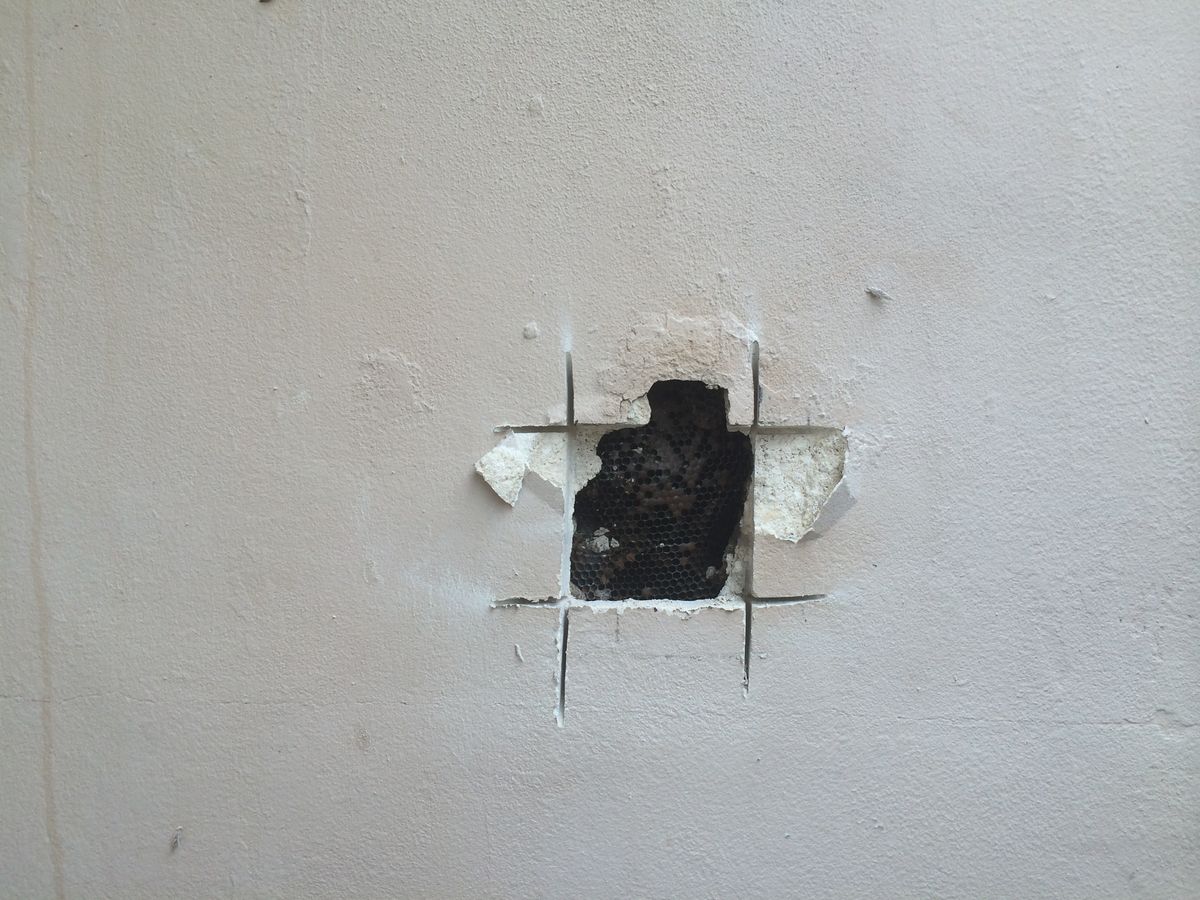
Cut into a Durand wall and the layers tell the story: thin coats of horsehair-reinforced plaster over strips of wood lath, nailed to studs a century ago and still doing their job. Cut into a Mountain bungalow from the 1950s and it's a different material entirely — gypsum board, taped seams, none of the lath. Cut into a wall in a newer Stoney Creek or Ancaster subdivision and you're looking at drywall with a sprayed texture finish chasing 1980s trends. Hamilton's housing stock spans all three, sometimes inside the same renovated house, and IntraBuild repairs each one with the material and method it actually needs — not a generic patch that looks right for a week and fails by spring.
Pre-1920s Durand and Kirkendall homes were built with plaster over wood lath, and it cracks in long, straight lines where the lath boards meet. We assess whether to patch with drywall or work with the original plaster.
Post-war Mountain bungalows from the 40s through 60s see a steady run of popped nails as original framing keeps seasoning decades in — a normal, low-drama fix on real gypsum board.
Subdivisions built through the 80s and 90s carry a sprayed knockdown or orange-peel finish that has to be matched — we mix and test it on-site so a repaired section doesn't read as flat under daylight.
Homes on original stone foundations carry more ambient moisture through the wall than poured concrete — the drywall or plaster above it needs the source addressed, not just a fresh coat.
Durand and Kirkendall homes built with plaster over wood lath crack in patterns modern drywall never does — reading that pattern correctly is the difference between a repair that holds and one that reopens.
A basement built on a stone foundation naturally carries more moisture through the wall than poured concrete — the drywall above it needs the source addressed, not just a fresh coat of primer.
Mountain-area homes from the 40s through 60s still shift slightly with the seasons, decades in — nail pops and small ceiling cracks are a normal, ongoing part of owning one.
A property renovated for resale sometimes has a patch job done fast and cheap by a previous owner — we find those, redo them properly, and match the surrounding texture.
Pricing in Hamilton depends on what the house actually needs — a plaster crack read correctly is a different job than a damp-stained basement ceiling. As a guide, expect $120–650 per repair depending on tier, with a service-call minimum of $500, before HST. We'll tell you plainly which tier your repair falls into once we've seen photos or the wall itself.
| Single plaster or nail-pop patch | $120–200 |
|---|---|
| Larger hole with backing | $220–380 |
| Damp or water-stained ceiling section | $350–650 |
| Whole rooms / full skim | quoted on site |
Every Hamilton repair price covers the patch, tape, sanding and a paint-ready finish, with no separate travel fee. A single plaster or nail-pop patch usually lands close to the $500 minimum. These are guide ranges before HST — a free written quote confirms the exact price once we've seen the wall.
Century homes near the escarpment carry original plaster and lath that cracks in its own pattern — over transoms, along staircases. We patch what's contained and leave sound plaster alone rather than tearing it out unnecessarily.
Older homes built on stone foundations show the occasional damp line on basement drywall — we confirm the moisture source, let things dry properly, then repair and seal with a stain-blocking primer.
Bungalows and side-splits from the 40s through 60s up the escarpment produce a steady, normal run of popped nails and small ceiling cracks as original framing keeps seasoning.
Homes being prepped for resale or rent often carry a scatter of old holes and mismatched prior patches — we bring the whole wall to one consistent, paint-ready finish.
A crack patched once without mesh tape or proper backing often reopens within a year — we redo it the right way so it stays closed.
A wall with a dozen small holes from years of rearranged art or shelving — consolidated into one visit instead of a hole-by-hole approach.
A homeowner finally addressing basement moisture finds a stained or soft patch of drywall behind old storage — we repair once the humidity issue is under control.
Sellers booking a round of small plaster and drywall patches before listing photos — timed carefully around a closing date.
A single plaster crack or nail pop gets the same careful attention as a full renovation repair list — no job's too small for a proper patch.
Poly sheeting and vacuum-attached sanding tools matter even more in a home with original trim and floors worth protecting — we set up accordingly.
Priced and agreed before we start, carried out by the same insured crew that builds our new drywall installs — no surprises once the wall's open.
Every repair is left primed and ready for paint, texture matched to the surrounding wall — original plaster included — or handed to our painting crew to finish.
Send photos, including a wide shot of the room — for older homes, context helps us size the tier correctly before we visit.
We confirm whether we're dealing with drywall, original plaster, or a mix, and choose the repair method that actually holds for that wall.
Floors, trim and nearby furniture get covered, especially important in a home with original finishes worth protecting.
Damaged material is cut to sound substrate and backed with new board, mesh or lath support so the patch has somewhere to hold.
Compound goes on in thin coats, feathered wide, and sanded between coats until the repair blends into the surrounding wall or ceiling.
A stain-blocking primer goes on where needed, we walk the repair with you, and it's ready for paint the same day.
Most Hamilton repairs finish in a single visit. Plaster work or a damp-affected ceiling occasionally needs a short second trip once things have dried or cured properly — either way, the same crew sees it through.
Most repairs run $120 to $650 depending on tier, with a service-call minimum that scales with the job, before HST. A nail-pop or small plaster patch sits near the low end; a damp-stained ceiling near the top. A free written quote from photos sets the exact number.
We repair the drywall and can provide photos and a written scope of the damage for your claim, but we don't file or negotiate the claim itself — that stays between you and your insurer or adjuster.
Usually, yes for anything beyond emergency drying — most policies expect the damage documented before repairs start, so we'll photograph everything thoroughly and can hold off cutting into the wall until you've had the adjuster out.
Not necessarily — stone naturally carries more ambient moisture than poured concrete, which shows up as a faint damp line sometimes. It only becomes a repair issue once that moisture actually reaches and softens the drywall above it.
Both — we assess whether a cracked plaster wall in an older Hamilton home should be patched in place or repaired with drywall, and explain the reasoning either way.
In most cases, yes — smooth, lightly textured or knockdown finishes can be matched so a drywall patch blends into surrounding original plaster rather than standing out.
For most Hamilton homes, yes — especially with original plaster, where an improper patch often cracks again within a year. With a $500 minimum either way, it's worth doing properly once.
If plaster is cracked and crumbling throughout a room, or damage is spread across most of a ceiling, full re-board through our drywall installation service is often the same cost as chasing patches — and leaves a more consistent result.
Drywall repair isn't limited to Hamilton — IntraBuild works right across the GTA and Southern Ontario, all on one written per-square-foot price with no separate travel fee.
Every fall, the same pattern shows up — a summer's worth of humidity swings finally opens a plaster crack that had been holding all season, or an ice dam from last winter finally stains through by the time the heat comes back on. Send a few photos of whatever your house is telling you, and IntraBuild will size it honestly, plaster or drywall, with a written price back within 48 hours. Old houses deserve the right fix, not the fast one.
Get a free quote