Short answer: stop the water and dry the area first — nothing else matters until that is done. Then the rule for water-damaged drywall is simple. A stain or a small soft area on board that is otherwise dry and firm is a repair: cut back, new section, stain-blocking primer, at $350–650 per section with a $200 service-call minimum, before HST. Board that is soaked through, sagging, growing mould, or damaged across more than about a third of the wall or ceiling is a replacement, priced as new drywall at $3.00–4.25 per square foot (Level 4), with ceilings at the top of that band. Here is how to tell which one you have, what the fix involves, and how to handle the insurance side.
A five-minute assessment
Before calling anyone, look and touch:
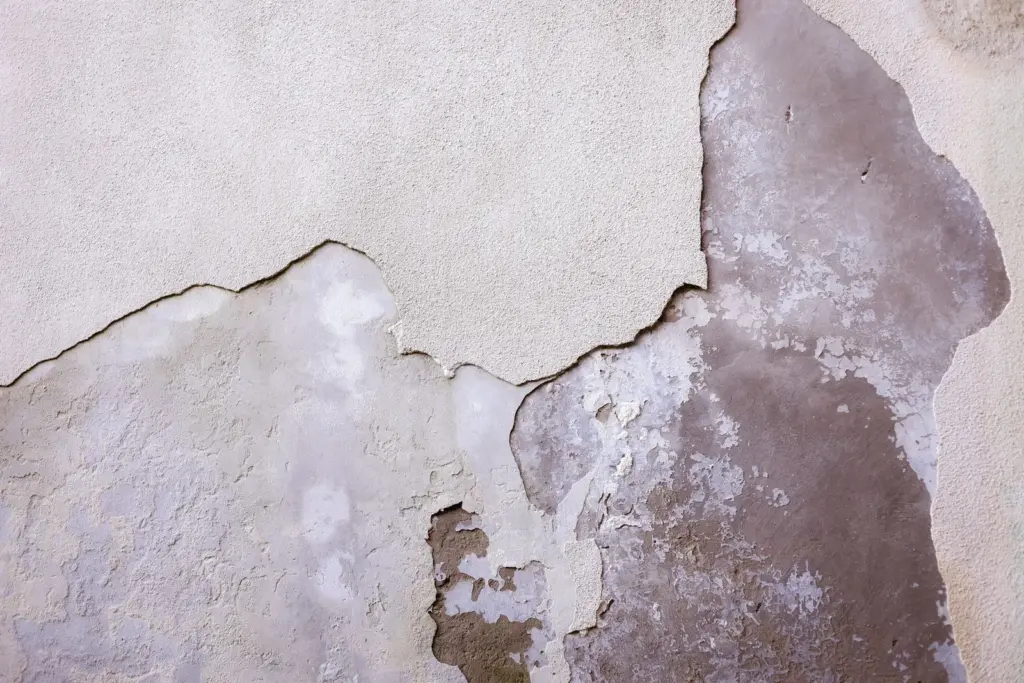
- Colour of the stain. A yellow or tan ring with a defined edge is an old, dried leak. A dark, spreading patch is wet now.
- Press on it. Firm board with a stain on it is a candidate for repair. Board that gives, crumbles, or feels spongy has lost its strength and is coming out.
- Look along the surface. Any sag or belly in a ceiling means the board is holding water or has separated from the screws. Treat a sagging ceiling as a hazard: keep people out from under it and poke a small hole at the low point with a screwdriver to drain it into a bucket before it lets go on its own.
- Smell. A musty odour means the cavity has been wet long enough for mould to start, even if the surface looks fine.
- Moisture meter. A pin-type meter is inexpensive and settles the question. Drywall that reads dry can be repaired; board that still reads wet days after the leak is stopped needs to come out so the framing behind it can dry.
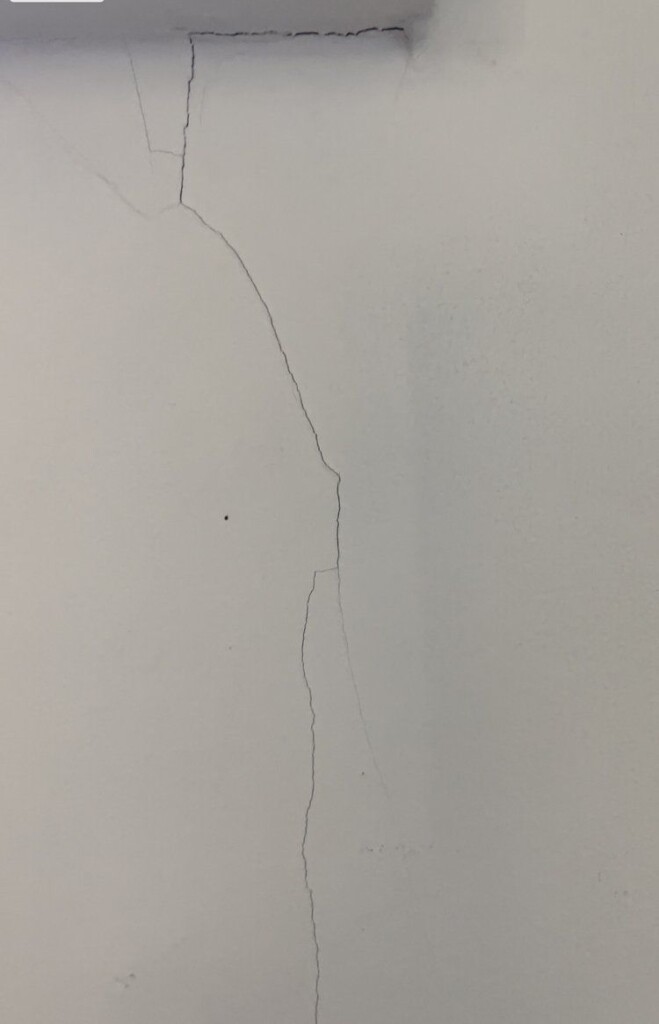
Repair or replace: what each sign means
| What you see | What it usually means | What we do | Cost (before HST) |
|---|---|---|---|
| Stain only, board firm and dry | Old or minor leak, surface damage | Seal with stain-blocking primer; cut back and patch if the paper has bubbled | $350–650 per section |
| Soft spot, small area | Board wet at the leak point, dry around it | Cut back to sound board, replace the section, tape, prime | $350–650 per section |
| Sagging ceiling | Board saturated or holding water | Drain, remove the sagging area, dry the cavity, replace | $350–650 per section, or per sq ft if the area is large |
| Visible mould or musty smell | Wet for days or longer, cavity affected | Remove affected board, dry and treat the cavity, replace; large areas need a remediation contractor first | Per sq ft, $3.00–4.25 at Level 4 |
| Whole ceiling or most of a wall | Burst pipe, long-running leak | Full removal and new board, taped and finished | $3.00–4.25 per sq ft; ceilings at the top of the band |
Per-section pricing is the Water & Ceiling tier on our drywall repair page; the full tier breakdown for holes, cracks and ceilings is in our guide to drywall repair cost in Ontario. Once an area is big enough to measure in square feet, it is priced as drywall installation instead.
Why you cannot just paint over the stain
Water carries tannins and minerals out of the framing, the insulation and the paper face of the board, and leaves them on the surface. Ordinary paint — even two or three coats — is porous enough for that residue to migrate through. The ring disappears when the paint is wet, looks fine when it dries, and comes back within weeks as a yellow ghost. The fix is a stain-blocking primer: a shellac- or oil-based sealer that locks the residue in place so topcoats stay clean. On a firm, dry, unbubbled stain, that primer plus paint is the whole repair. On anything more, it is the final step after the board work. Skipping it is the single most common reason a “fixed” ceiling looks stained again the following spring.
The repair process, in order
- Fix the source. Roof, flashing, ice dam, a bathroom above, a supply line, a window seal. This is not our trade — we start once the leak is stopped and the area is dry — but no drywall repair survives a live leak.
- Dry the cavity. Fans and a dehumidifier for a few days at minimum; longer for a ceiling with wet insulation. Board replaced over a damp cavity will stain again and grow mould behind it.
- Cut back to sound board. The damaged area comes out to the nearest framing, plus a margin, so the new piece has solid backing and the paper around it is dry.
- Replace, tape and finish. New board screwed to framing, seams taped and coated in two or three passes with drying time between, sanded flush, textured if the ceiling was textured.
- Prime and paint. Stain-blocking primer over the repair and any surrounding staining, then paint — see our interior painting page. On a ceiling, painting the whole ceiling rather than the patch is what makes the repair disappear.
Allow drying time on both ends: days for the cavity before we start, and a day or two between coats. A water repair is rarely a single-visit job the way a nail pop is.
Why ceilings cost more than walls
Water damage is mostly a ceiling problem, and ceilings are the slowest drywall there is. Everything is overhead, the board is heavier to hold in place, and taping in raking light from a window or pot lights shows every flaw. Many ceilings in 1970s–1990s houses and condos are also textured, so the new section has to be re-textured and blended into the old — and if that texture is popcorn, there is an asbestos question before anyone sands it. The options for a stained popcorn ceiling, including simply replacing or skimming the whole thing, are in our guide to popcorn ceiling removal. That is why the Water & Ceiling tier starts at $350 rather than $120.
Insurance: what usually applies
We are not insurance adjusters and cannot tell you what your policy covers. As a general pattern, sudden events — a burst pipe, an overflowing appliance, a storm that opens the roof — are commonly covered, while damage from a slow leak that went unaddressed often is not. Read your policy or call your broker before assuming either way. What you can do regardless:
- Photograph everything before anything is touched — the stain, the sag, the source, the water on the floor.
- Keep the plumber’s or roofer’s invoice that shows what failed and when.
- Ask the drywall contractor for a written scope of work with the repair area, method and price broken out; adjusters want line items, not a lump sum.
- Do not wait for the claim to dry the space. Drying is mitigation and delaying it makes the damage — and the claim — larger.
Bathrooms and kitchens: stopping the repeat
If the damage is under or beside a shower, tub, toilet or sink, the leak will happen again unless the cause is fixed — a failed caulk line, a cracked grout joint, a loose wax ring, a supply fitting. When we replace board in those rooms we use moisture-resistant board, and behind tile the right substrate is cement board, not drywall of any kind. A second stain in the same spot within a year is a plumbing or tiling problem wearing a drywall costume.
What we see across the GTA
- Toronto — condo ceilings damaged by the unit above: a washing machine hose, a bathtub overflow, a failed shower pan. The building’s insurance and the neighbour’s are usually involved, and the property manager will want the written scope. See drywall repair in Toronto.
- Mississauga — 1970s–1990s houses with original second-floor bathrooms over the kitchen or family room; the ceiling stain below is the first sign the tub surround or toilet seal has failed. See drywall repair in Mississauga.
- Brampton — newer homes with ice damming at the eaves and window-seal leaks after the first few winters, showing up as stains at the top corners of bedroom walls. See drywall repair in Brampton.
Getting a price
Send a straight-on photo of each damaged area with something for scale, say whether the source is fixed and how long ago, and mention if the ceiling is textured. We come back with a written price per section or per square foot, with HST as a separate line. IntraBuild repairs water-damaged drywall and ceilings across Toronto, the GTA and Southern Ontario: one insured crew, a written scope for your insurer, no travel fee. Get a water damage repair quote or call (647) 558-8723.
Frequently asked questions
Can water-damaged drywall be saved?
If it is dry, firm and flat and only stained, yes — a stain-blocking primer and paint, or a small cut-back and patch. If it is soft, sagging, crumbling or smells musty, the affected section has to come out. Board does not recover its strength once it has been saturated.
How long does drywall need to dry before it can be repaired?
Until a moisture meter reads dry, which is usually a few days with fans and a dehumidifier after the leak is stopped, and longer for ceilings with wet insulation above. Repairing over a damp cavity is how stains and mould come back.
Does insurance cover water damage to a ceiling?
It depends on the policy and the cause. Sudden events such as a burst pipe are commonly covered; slow, long-term leaks often are not. Check with your broker, keep photos, and get a written scope of work from the contractor for the claim.
How much does it cost to repair a water-stained ceiling?
$350–650 per section at the Water & Ceiling tier, before HST, with a $200 service-call minimum. That covers cut-back, board replacement, taping, texture where needed and stain-blocking primer. A whole ceiling is priced per square foot at $3.00–4.25, ceilings at the top of the band.
Will mould grow in wet drywall?
It can start within a couple of days if the board and the cavity stay damp. Fast drying is the best prevention. Small areas are handled as part of the board replacement; widespread mould behind walls or ceilings needs a remediation contractor before any drywall work, and that is not a service we provide.