Short answer: in a pre-1950s Ontario house the plaster vs drywall decision comes down to three questions. Is the plaster still attached to the lath behind it? How much of the wall is damaged? And are you planning to run new wiring or insulate the exterior walls? If the plaster is sound and the damage is local, repair it at our drywall repair tiers ($120–650 per repair, $200 minimum). If the walls are solid but tired — map cracks, old patches, texture — skim-coat them at the Level 5 rate of $4.25–5.75 per square foot. If the plaster is coming away from the lath across whole walls, or the walls have to be opened anyway, replace it with new drywall at the Level 4 rate of $3.00–4.25 per square foot plus removal, which is quoted on site. All before HST. Below is what is inside an old wall, a problem-by-problem table, and when each of the four routes makes sense.
What is inside an old wall
Lath and plaster — standard in Ontario houses until roughly the late 1940s — is a grid of thin wood strips nailed across the studs, with three coats of plaster pushed through the gaps so it hooks behind the lath. Those hooks are the “keys”, and they are what hold the wall on. The result is heavy, hard, slightly irregular, and a good sound barrier. Drywall is a factory sheet of gypsum between paper faces, screwed to the studs and taped at the joints: lighter, flatter, faster, and easy to patch. Between the two eras there is also rock lath — small gypsum panels plastered over — which behaves like plaster on the surface and like drywall underneath.
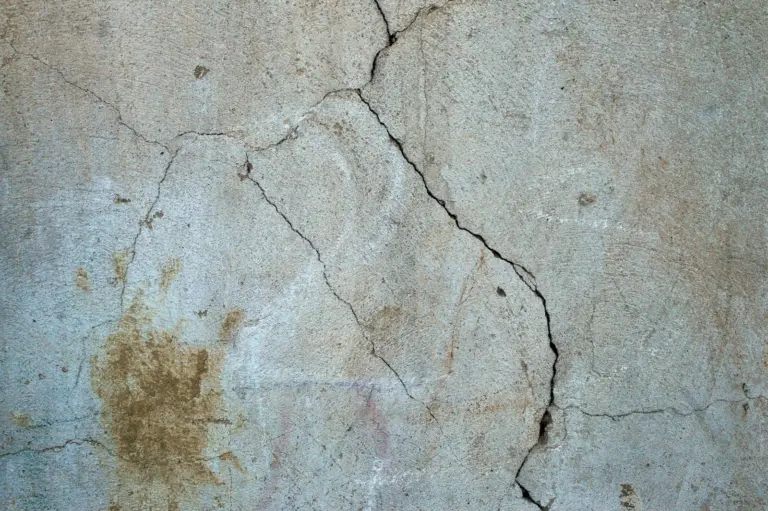
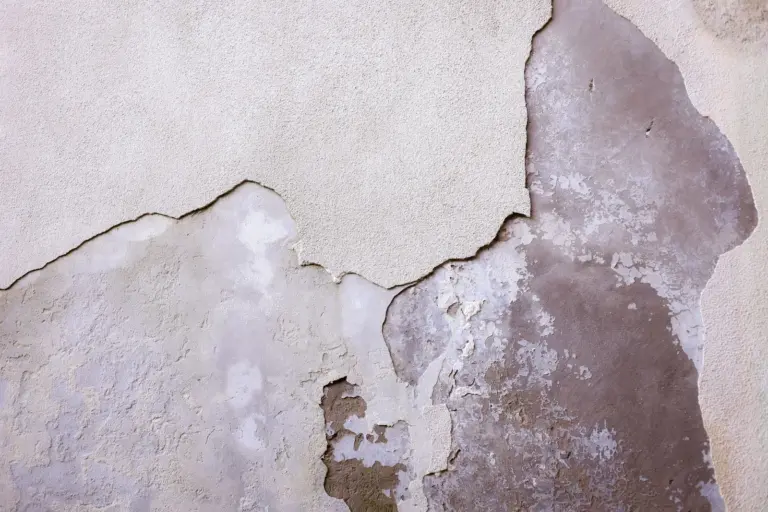
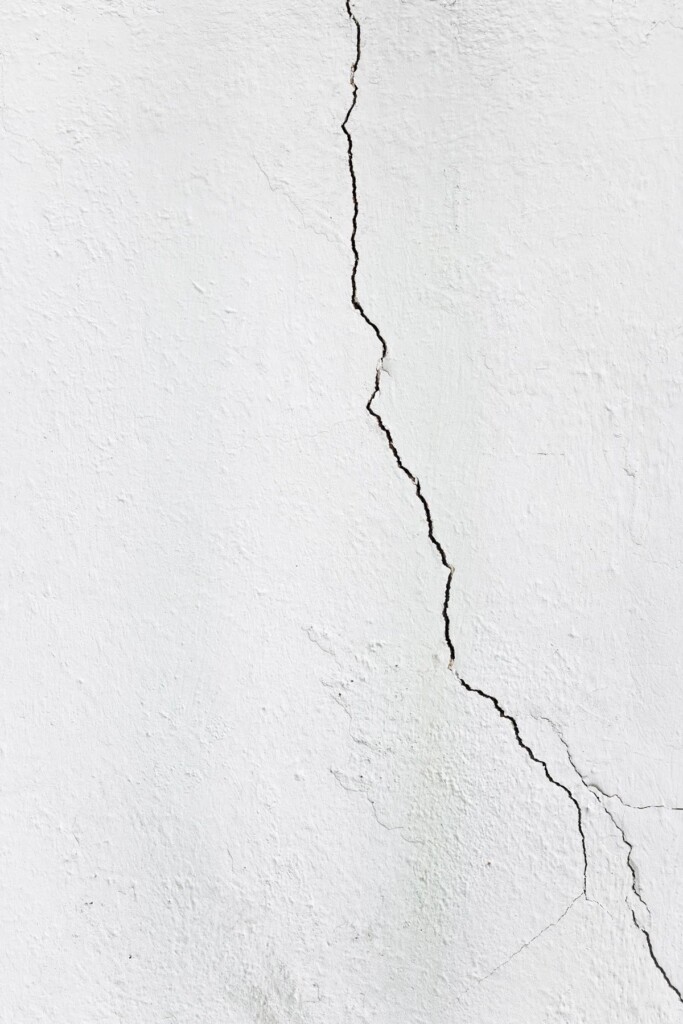
Old plaster fails in three predictable ways: the keys break and the plaster sags away from the lath (it sounds hollow and feels springy), the house settles and the plaster cracks along the lath lines and at door and window corners, and water gets in and the plaster turns soft and powdery. Which of those you have decides everything below.
Problem by problem: the cheapest right fix
| What you see | Cheapest correct fix | Pricing |
|---|---|---|
| Hairline cracks, small chips, nail holes | Fill with setting compound, tape the cracks so they stay closed, feather out | Patch tier, $120–200 per repair |
| Plaster bulging or loose but not fallen | Re-secure to the lath with plaster washers, then skim the area flat | Quoted on site |
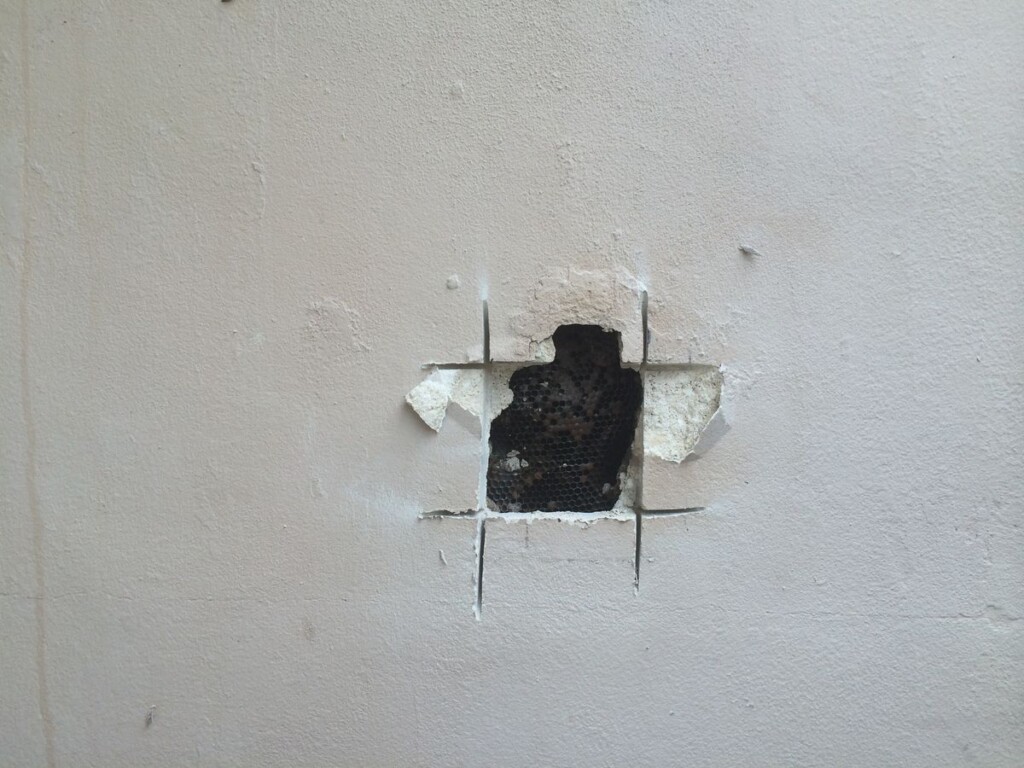
| A large damaged area on an otherwise sound wall | Cut out to the lath, fit a drywall patch shimmed to plaster thickness, tape and blend | Standard tier, $220–380 per repair |
| Water-damaged or sagging ceiling | Cut back to sound plaster or lath, replace the section, stain-blocking primer | Water & Ceiling tier, $350–650 per repair |
| Whole room: sound but cracked, patched or textured everywhere | Skim-coat the entire surface | Level 5 rate, $4.25–5.75 per sq ft |
| Whole room: plaster detaching, or walls being opened for wiring or insulation | Remove and replace with new drywall | Level 4 rate, $3.00–4.25 per sq ft, plus removal quoted on site |
Repair pricing is explained tier by tier in our guide to drywall repair cost in Ontario; the per-square-foot rates and what removal involves are in our guide to drywall installation cost in Ontario.
Route 1: repair, when the plaster still holds
Plaster that is firmly keyed to the lath is worth keeping. It is harder and quieter than drywall, and it carries the original trim profiles and ceiling lines that make a century house look like one. Cracks are cut open slightly, filled with a setting compound, and taped — filling alone reopens the next winter. Loose sections are pulled back to the lath with plaster washers, which are then buried under compound. Holes get a drywall insert shimmed to the plaster’s thickness so the patch sits flush. Every repair finishes prime-ready; painting is separate, on our interior painting packages. Details and the per-repair minimums are on the drywall repair page.
Route 2: skim-coat, when the wall is sound but tired
A wall that is solid everywhere but shows decades of patches, map cracking, a sand-float texture or wallpaper scars is a skim-coat candidate. The surface is cleaned, cracks are taped, and two or three thin coats of compound go over the entire wall, sanded flat and primed. This is exactly the Level 5 process from our guide to drywall finish levels, and it prices at the Level 5 rate — $4.25–5.75 per square foot. It keeps the plaster, keeps the trim in place, makes almost no dust compared with demolition, and produces a flatter wall than most new drywall. If the old surface is sound, a skim coat is usually cheaper than replacement once removal is counted.
Route 3: overlay drywall over plaster
When the plaster is mostly attached but too rough or too cracked to skim economically, and the room does not need to be opened, thin ⅜” or ½” drywall can be screwed through the plaster into the studs and finished as new. Advantages: no demolition, a flat new surface, and the old plaster stays as a sound and thermal layer. Disadvantages: the wall grows by up to half an inch, so baseboards, casings and crown either come off and go back on or get built out, electrical boxes need extenders, and window returns get shallower. It is the right choice for a plain room with simple trim; it is the wrong one for a room whose mouldings are the reason you bought the house. Priced at the Level 4 rate plus the trim and box work, quoted on site.
Route 4: full replacement
Sometimes plaster has to come out: it is detaching from the lath across whole walls, there is mould or long-term water damage behind it, or — most often — the exterior walls are being insulated and the house rewired, which means the cavities have to be open anyway. Removing lath and plaster is heavy, dusty work; a single room fills a bin, and it is quoted on site rather than by the square foot. Once the studs are exposed, the wall is rebuilt like new construction — insulation and vapour barrier on exterior walls, wiring, then drywall at Level 4 — with the option of Level 5 in rooms that will get raking light or dark paint. See our drywall installation page for board types and rates.
Two things before anyone swings a hammer. First, asbestos: plaster, skim coats and textured finishes in older houses can contain it, as can old pipe insulation behind the wall. A lab test on a sample comes before demolition, and if it is positive, removal is licensed abatement work rather than a renovation task — the same rule as in our guide to popcorn ceiling removal. Second, the trim: original casings and baseboards are removed carefully and numbered so they can go back on the new wall; replacing century profiles is expensive and never quite matches.
Century homes in Hamilton, Toronto and the smaller Ontario towns
Hamilton’s brick Victorians and Edwardians, Toronto’s pre-war semis, and the older streets of Stratford, St. Catharines and Cobourg share the same construction and the same decisions. What to expect: walls that are out of square and out of plumb (a skim coat follows the wall; a drywall overlay wants a flat plane and shows where there is not one), plaster crown and ceiling medallions worth saving, horsehair in the base coat, and rooms where one wall has been replaced with drywall in a previous renovation and the two never quite met. In a designated heritage property, exterior work is regulated and interior plaster usually is not, but the sensible practice is the same: keep what is sound, repair what is not, and match profiles when something has to go. Local pages: drywall and plaster repair in Hamilton and drywall repair in Toronto.
Getting a quote
Send photos of each wall or ceiling straight on and in raking light from a lamp, say roughly when the house was built, and press on the plaster around the damage — tell us whether it is firm or moves. Say whether wiring or insulation is planned. We come back with a route per room and a written price with repairs, skim, removal and HST as separate lines. IntraBuild repairs, skims and replaces plaster and drywall across Hamilton, Toronto, the GTA and Southern Ontario: one insured crew, a written price, no travel fee. Get a plaster repair quote or call (647) 558-8723.
Frequently asked questions
Is plaster better than drywall?
Sound plaster is harder, quieter and part of an old house’s character; drywall is flatter, lighter, cheaper to install and far easier to patch. Neither is better in the abstract. Plaster that is still attached to the lath is worth keeping; plaster that is not is worth replacing.
Can you drywall over plaster?
Yes, with ⅜” or ½” board screwed through to the studs, as long as the plaster is mostly attached. The wall thickens by up to half an inch, so trim comes off and goes back on and electrical boxes get extenders. It suits plain rooms; ornate trim usually argues for a skim coat instead.
How much does it cost to replace plaster with drywall?
New drywall at Level 4 is $3.00–4.25 per square foot of board turnkey, before HST, plus removal of the old lath and plaster, which is heavy, dusty work quoted on site after seeing the rooms. If the old surface is sound, a skim coat at $4.25–5.75 per square foot is usually the cheaper route because there is nothing to remove.
Can cracked plaster be repaired?
Yes. Cracks are opened, filled with setting compound and taped so they stay closed; loose areas are pulled back to the lath with plaster washers and skimmed. Most crack and hole repairs fall in the Patch and Standard tiers, $120–380 per repair.
Does old plaster contain asbestos?
It can, particularly in skim coats, patching compounds and textured finishes from the mid-20th century, and old pipe insulation behind the wall often does. Test a sample before any demolition or heavy sanding. Patching and skimming over intact plaster does not disturb it; tearing it out does.