Short answer: drywall repair cost in Ontario runs from about $120 to $650 per repair, before HST, with a $200 service-call minimum. A nail pop or fist-sized hole sits at the bottom of that band, a door-knob hole or failed seam in the middle, and a water-stained or sagging ceiling at the top. A typical single-repair visit lands right around the minimum, which is why it pays to have every dent and crack in the house fixed in one trip. Below is what each tier covers, what specific damage costs, when a patch stops making sense, and how to get an exact price from a photo.
Drywall repair cost by tier (2026)
Repairs are priced per defect, not per hour and not per square foot. The tier is set by how much of the wall or ceiling has to be rebuilt to make the damage disappear.
| Tier | Typical damage | What is included | Cost per repair |
|---|---|---|---|
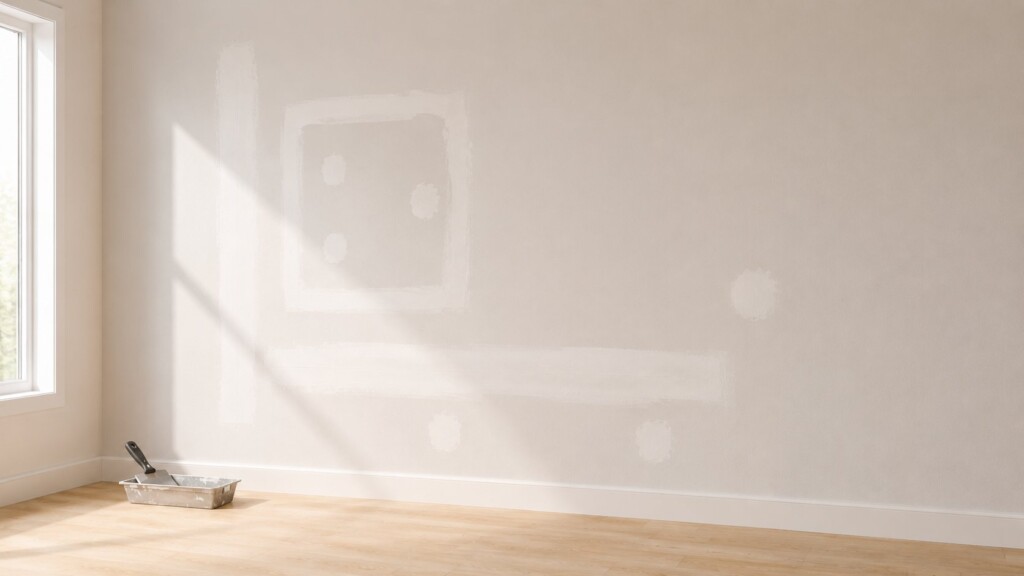
| Patch | Nail pops, small holes, hairline cracks | Holes up to fist size filled, taped and feathered, sanded smooth and prime-ready; multiple patches per visit | $120–200 |
| Standard (most chosen) | Big holes, failed seams, damaged corner bead | Door-knob holes with backing, seams and corners re-taped, blended flush with the wall | $220–380 |
| Water & Ceiling | Stained ceilings, soaked board, sagging | Everything in Standard plus cut-back and board replacement, stain-blocking primer, overhead and textured ceilings | $350–650 |
All three are before HST, with no travel fee anywhere in our service area. What each tier includes in detail is on the drywall repair page; the rest of this article is about matching your damage to a number.
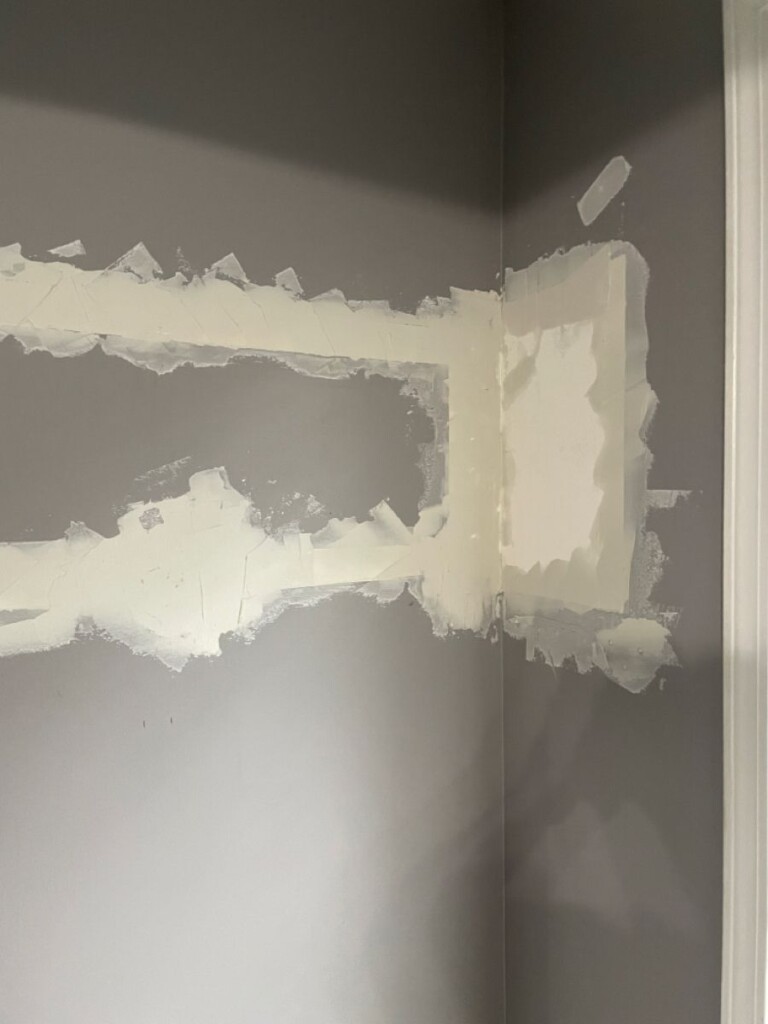
Cost to repair drywall by type of damage
- Nail pops and screw pops — Patch tier, $120–200. The fastener is reset or replaced beside the pop, the crater filled and feathered. Usually there are a dozen in a house once you look, which is why they are done as a group.
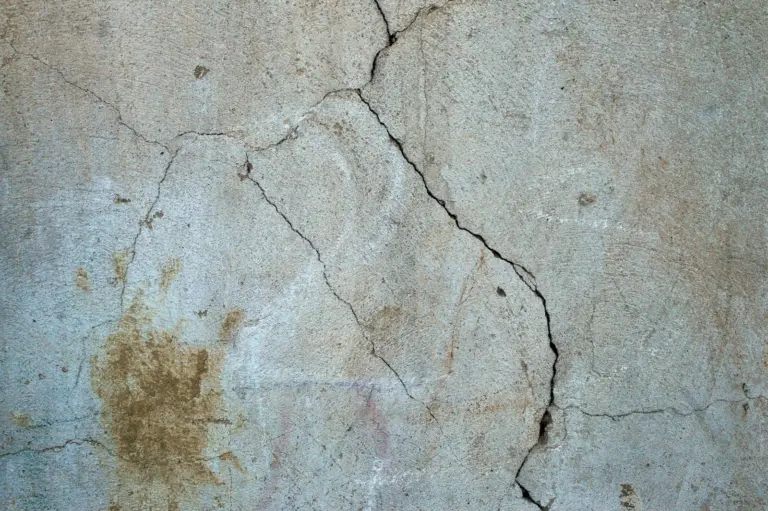
- Hairline cracks — Patch tier. Cracks at door and window corners are taped, not just filled, so they do not come back the next winter. A crack that keeps reopening along a straight line is a failed seam and moves to Standard.
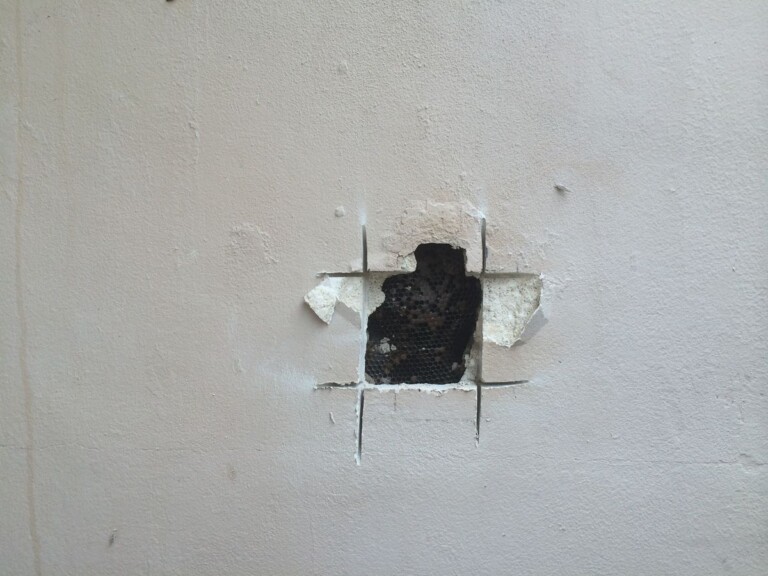
- Small holes, up to fist size — Patch tier, $120–200. Filled, taped, feathered and sanded to a prime-ready surface.
- Door-knob holes and larger — Standard tier, $220–380. A backing piece goes in behind the opening, a new section of board is fitted, then taped and blended flush. A door stop is worth adding while the crew is there.
- Corner bead — Standard tier. Dented or cracked outside corners get the bead cut out, replaced and re-mudded along the full length so the repair does not show as a bump.
- Failed seams — Standard tier. Bubbling or lifting tape is cut out, the joint is re-taped and coated in two or three passes.
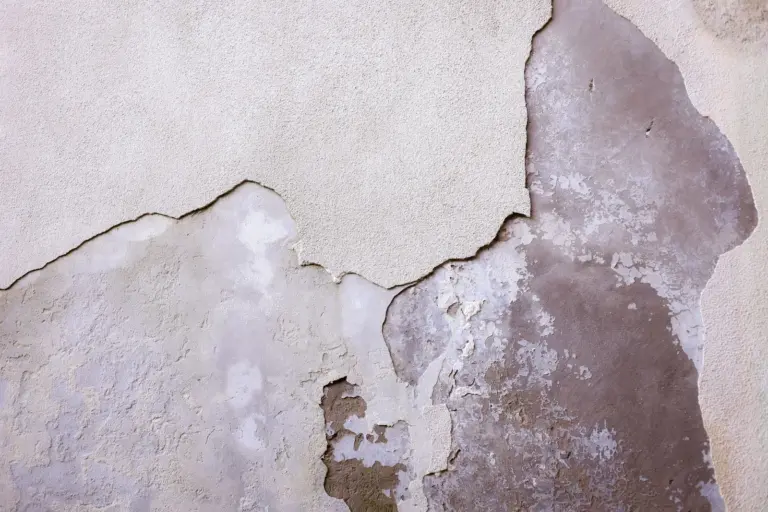
- Water-stained ceiling — Water & Ceiling tier, $350–650. The stained section is cut back to sound board, replaced, taped and sealed with a stain-blocking primer.
- Sagging or soaked ceiling — Water & Ceiling tier, top of the band. Sagging board has lost its strength and comes out; anything wet behind it is dried before the new section goes in.
- Patching a popcorn or stippled ceiling — Water & Ceiling tier, because overhead and textured work is slower and the new texture has to be blended into the old. The options for a popcorn ceiling — removal, skim-coating and repair — are in our guide to popcorn ceiling removal.
- Whole rooms or full skim coats — quoted on site; at that point the job is closer to a per-square-foot drywall installation than a repair.
Why there is a $200 minimum and how to make it work for you
A single nail pop takes a few minutes of actual work but a full visit: travel, setup, drop sheets, two or three coats of compound with drying time between them, sanding and cleanup. The $200 service-call minimum covers that visit. The way to get value from it is to stop thinking in single repairs. Walk the house with painter’s tape and mark every pop, dent, crack and scuffed corner — one visit at Patch tier covers multiple patches, and a Standard door-knob hole plus the six nail pops in the hallway costs very little more than the door-knob hole alone.
The other reason to batch repairs is painting. Every repair is delivered prime-ready, and a patched wall looks like a patched wall until it is painted. If you are planning to paint a room anyway, have the repairs done first and paint everything in one pass — see how that is priced on our interior painting page. Painting is a separate line, not part of the repair price.
Repair or replace: when a patch stops making sense
A patch is the right call when the board around the damage is dry, solid and flat. It is the wrong call in three situations:
- The board is wet or has been wet for days. Gypsum that has soaked loses its strength and the paper face lets go. Once it sags or crumbles at the edge of the hole, the damaged section has to come out regardless of what the stain looks like.
- There is mould behind or on the board. Sealing it in is not a repair. The affected board comes out, the cavity is dried and treated, and new board goes in.
- More than about a third of the wall is damaged. At that point you are paying repair rates for what is really a re-sheet. Replacing the wall at $2.25–5.75 per square foot on our drywall installation pricing is usually cheaper and gives a flatter result than a patchwork of repairs.
Ceilings and water damage: the order matters
A stain on the ceiling is a symptom. Before any repair, the leak — a roof, a bathroom above, a plumbing joint, ice damming at the eaves — has to be found and stopped, and the cavity has to dry. A repair done over a live leak fails within weeks. Once it is dry, the process is cut-back to sound board, new board fitted and taped, then a stain-blocking primer over the whole repair. That primer is the step people skip when they try to just paint over the stain: water stains bleed straight through ordinary paint, sometimes after the second coat looks fine, and the yellow ring returns. Overhead work is slower than wall work and textured ceilings need the texture matched, which is why the Water & Ceiling tier starts where Standard ends.
Older homes: plaster and lath
Century houses in Toronto, Hamilton and the older parts of Mississauga and Brampton have plaster over wood lath rather than drywall. The damage looks different — cracks that follow the lath lines, sections that sound hollow, plaster keys that have broken away — and so do the fixes:
- Patch a crack or a small hole with a bonding agent and setting compound, then feather it out.
- Skim a wall that is sound but rough or map-cracked all over; this is where whole-room pricing applies.
- Replace a section that has separated from the lath or is soft with moisture, usually with drywall shimmed to the plaster thickness.
Plaster repairs are quoted on site more often than drywall, because what is behind the surface is not visible in a photo. If you are in a pre-1950s house, say so when you send pictures.
Drywall repair across the GTA and Southern Ontario
- Toronto — condo scuffs and door-knob holes, plaster in the older semis, and building rules for access. See drywall repair in Toronto.
- Mississauga — settling cracks and nail pops in 1980s–2000s houses; a batch visit at Patch tier is the usual job. See drywall repair in Mississauga.
- Brampton — newer builds with builder-grade taping that lets go at corners and seams within the first few years. See drywall repair in Brampton.
- Hamilton — plaster and lath, water damage from older roofs and flat-roof additions. See drywall repair in Hamilton.
How to get an exact price before anyone comes out
- Take a photo of each repair straight on, with something for scale — a hand or a tape measure works.
- Count them. Six nail pops and one hole is a different visit from one hole.
- Say whether the ceiling or wall has been wet, and whether the leak is fixed.
- Say whether you want it painted afterward, so the repair and the paint can be quoted together as one job.
IntraBuild prices repairs from photos for Toronto, the GTA and Southern Ontario: a written price per repair, one insured crew, no travel fee. Get a drywall repair quote or call (647) 558-8723.
Frequently asked questions
How much does it cost to fix a hole in drywall?
Up to fist size, $120–200 at Patch tier. A door-knob hole or anything that needs a backing piece and a new section of board is $220–380 at Standard tier. Both are before HST, and both are delivered sanded and prime-ready.
Does the drywall repair price include painting?
No. Repairs are finished prime-ready; painting is a separate line so you can decide whether to touch up one wall or repaint the room. Quoting both together is the cleanest way to do it.
Is there a minimum charge?
Yes, $200 per service call. A single small repair sits near that minimum, so batching every pop, dent and crack in the house into one visit is the way to get the most out of it.
Can a water-damaged ceiling be repaired without replacing it?
Sometimes. If the board is dry, flat and firm and only the surface is stained, the section is sealed with a stain-blocking primer and refinished. If it is soft, sagging or has been wet for more than a day or two, the damaged section is cut back and replaced — that is the Water & Ceiling tier at $350–650.
How long does drywall repair take?
Most Patch and Standard repairs are done in one visit, with drying time between coats built into the day. A ceiling replacement section may need a second short visit for the final coat and primer. Painting adds a day if it is part of the job.