
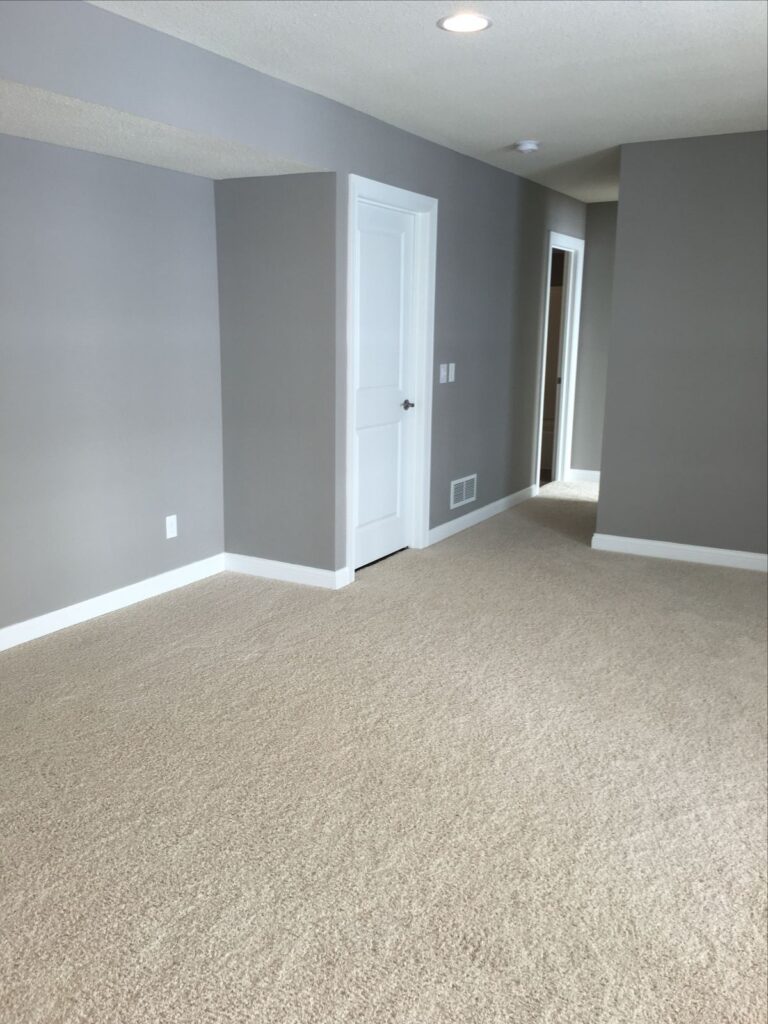
Short answer: the cost to paint trim, doors and ceilings is the step between our two core packages — roughly $2.25–2.75 per square foot of floor area: from a Colour Change ($2.50–3.00, walls only) to a Complete room ($4.75–5.75: walls, ceilings, trim and doors), before HST. That step buys the slow surfaces: ceilings cut in and rolled overhead, baseboards and casings sanded, caulked and enamelled — and the doors themselves, which now sit inside the Complete rate with an allowance of one door per 150 sq ft of floor area. Extra doors beyond the allowance run $85–160 each by package. The table shows the arithmetic; the rest of this article explains where the money goes and which items on a quote you can leave out without regret.
| Package | Per sq ft of floor area | Doors | Minimum |
|---|---|---|---|
| Colour Change (walls only) | $2.50–3.00 | Priced per door if added | $750 |
| Complete (walls, ceilings, trim and doors) | $4.75–5.75 | One per 150 sq ft included; extra $85 each | $1,200 |
| Premium (Complete scope, premium paints) | $6.50–8.00 | Included as in Complete; extra $115 each | $1,200 |
| Signature (by consultation) | from $9.50 | Included; extra $160 each | $2,500 |
The tiers and what each includes are on our interior painting page; room-by-room budgets are in our guide to interior painting cost in Ontario.
Ceilings: why they are priced separately
A ceiling is the same area as the floor, painted upside down. Overhead rolling is slower, the whole room below has to be masked, and under pot lights every lap mark shows — the same reason ceilings sit at the top of the band in drywall work. Ceilings also go first and have to dry before the walls are cut in, which is a scheduling cost more than a labour one.
When you can skip it: the ceiling is the same white it was, it has no stains or scuffs, and the wall colour is not changing dramatically. A clean white ceiling above fresh walls looks intentional.
When you cannot: a water stain — it will bleed through anything but a stain-blocking primer, and the reasons are in our guide to water-damaged drywall and ceilings; a ceiling that has yellowed or been touched up in a different white; or a popcorn texture you want gone, which is a removal or skim-coat job before paint, covered in our popcorn ceiling removal guide. A textured ceiling that is staying takes more paint and a thicker roller and is slower to cover evenly than a flat one.
Trim and baseboards
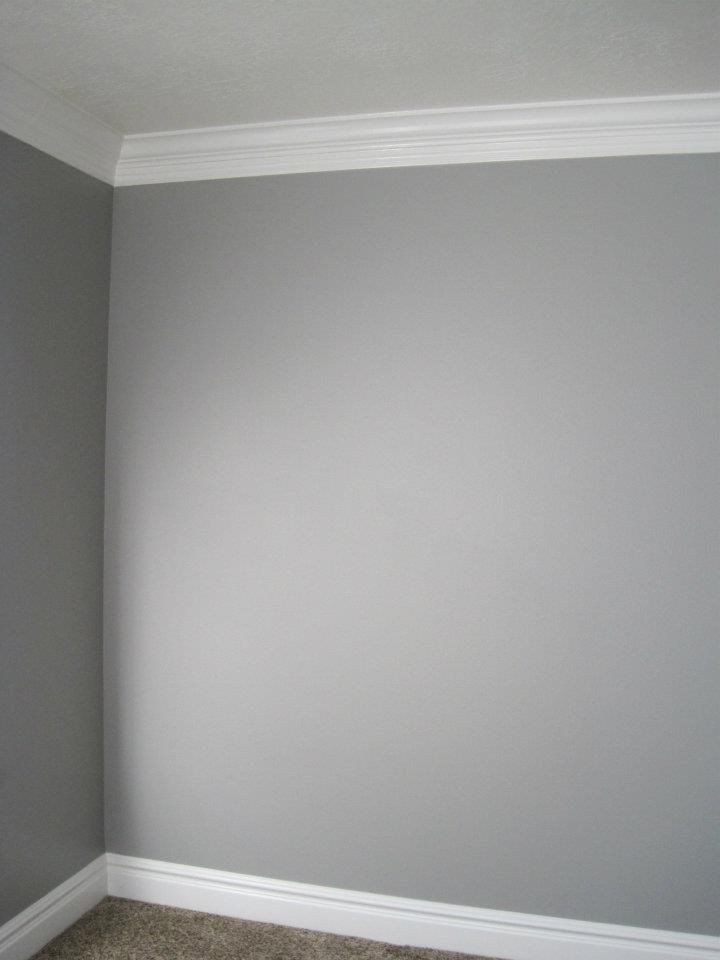
Trim is the slowest surface in the house per square foot of coverage, and it is where a good painter is most visible. The sequence: fill nail holes, sand, re-caulk the gap between trim and wall (the line that makes trim look crisp), prime any bare wood or old oil-based paint, then two coats of a harder enamel. Enamel dries overnight between coats — the timing is in our guide to how long interior painting takes — so trim usually spans two days even in a small room.
Two different jobs hide under “paint the trim”. Refreshing trim that is the same white and in good shape is one coat after a light sand and caulk touch-up, and it is quick. Repainting trim white-to-white after years of chips, brush marks and yellowed oil paint is the full sequence; so is changing the colour. Quote the one you actually need.
Doors
A door is two faces, four edges and a frame, and a six-panel door has dozens of edges to cut into where a flat slab has none. Panel doors take the longest by brush; flat doors are quick. For a house with many doors, taking them off the hinges and spraying them flat produces a smoother finish than a brush and can be faster overall, but it needs a place to spray and a day for the doors to be off. Doors are also where old oil-based paint is most likely, and an enamel over oil needs a bonding primer or it will peel in sheets. Under the current packages, doors live inside the Complete rate: every Complete, Premium or Signature job includes one door per 150 sq ft of floor area, and closet and bifold doors count toward that allowance. Doors beyond the allowance are $85, $115 or $160 each by package; on a Colour Change path, any door you add is simply priced per door. Painting inside closets is quoted per closet ($100 or $180 for a reach-in or walk-in with standard packages, up to $185/$320 at Signature), and wood-framed windows run $75–120 per window; vinyl and aluminum frames are not painted at all. The quote lists the door count against the allowance, so nothing is discovered on the invoice.
What makes a quote grow
- Crown moulding — cut in on both edges, often at ceiling height on a ladder; quoted per linear foot on site.
- Wainscoting and panel moulding — many short edges and profiles; quoted per piece or per linear foot on site.
- Stair spindles and railings — each spindle is painted on four sides by brush; the single slowest item in most houses, quoted per piece.
- Built-ins and shelving — inside, outside and every shelf edge; quoted per piece.
- Dark to light, or light to dark — an extra coat or a tinted primer on walls; on trim, a colour change means the full sequence rather than a refresh.
- Wall repairs — cracks, door-knob holes and old patches are fixed before paint at the Patch or Standard tier on our drywall repair page; they are a separate line so you can see them.
- High ceilings and stairwells — ladders or scaffold slow every step; 9-foot ceilings add about 10% and 10-foot-plus rooms or a stairwell about 25% for the areas they affect.
What does not make a quote grow
- The colour — any colour is the same price at the same tier, with two exceptions: very dark or saturated shades need an extra coat, and each additional colour beyond the main one adds $75 per colour (included at Signature).
- The number of rooms — the price follows floor area, not the count; three small rooms and one big one of the same total area cost the same.
- Furniture, if the room is cleared — an empty room is the baseline. Furniture that has to be moved and draped adds time; furniture that is gone adds nothing.
- Asking for a written quote — it arrives within 48 hours and costs nothing.
A worked example: one bedroom
Take a 12 × 12 bedroom, about 144 sq ft of floor. As a Colour Change, the walls alone are roughly $360–430; as a Complete room — ceiling, trim, and doors under the allowance — it is roughly $685–830, with the room’s 144 sq ft covering one included door and the second (entry plus closet makes two) adding $85. Two things to notice. Neither number reaches its package minimum ($750 for a Colour Change, $1,200 for Complete), which is why a single bedroom is nearly always bundled with a hallway, a bathroom or a second room. And the extra surfaces are about a day’s labour — the enamel dries overnight — which is why a one-bedroom job runs two days rather than one. Scale the same arithmetic to a whole house and the Complete-scope difference is what turns “from about $4,500 for a three-bedroom interior” into a house that looks finished rather than half done.
Across the GTA
The tiers are the same everywhere we work and there is no travel fee. What differs is the trim: Toronto’s pre-war semis and century houses carry tall baseboards, thick casings and plaster crown that take real time — see interior painting in Toronto — while newer homes across Halton have simpler profiles but more of them, with nine-foot ceilings and many doors per floor — see interior painting in Halton Region. Either way the quote lists the trim so you can see what you are paying for.
How to get a quote that matches the house
Walk each room and note: ceiling (yes or no, any stains, any texture), baseboards and casings (refresh or repaint), doors (how many, panel or flat), and anything extra — crown, wainscoting, spindles, built-ins. Send that list with the floor area and photos. The written quote comes back within 48 hours with the package, Colour Change and Complete options where it helps, and each extra as its own line with HST separate. IntraBuild paints across Toronto, the GTA and Southern Ontario with one insured crew, a written price and no travel fee. Get an interior painting quote or call (647) 558-8723.
Frequently asked questions
How much does it cost to paint trim and baseboards?
Ceilings, trim and doors are the difference between a Colour Change and a Complete room: roughly $2.25–2.75 per square foot of floor area, before HST, with one door per 150 sq ft already inside the Complete rate. Extra doors are $85–160 each by package; crown, wainscoting and spindles are quoted per linear foot or per piece on site.
Do painters charge extra for ceilings?
Yes — a Colour Change price is walls only. Ceilings are overhead work, need the room masked below and go first so the walls can follow, so they are part of the Complete rate rather than the Colour Change rate.
Should I paint the doors the same colour as the trim?
Usually yes: matching doors and trim in the same enamel and sheen is the cleanest look and the simplest to touch up later. A contrasting door colour is a legitimate choice, but it is a colour change on every door, which means the full sequence rather than a refresh.
Is it cheaper to paint everything at once?
Yes. One setup, one round of masking, ceilings and trim drying while walls are painted, and the minimum project charge spread over more work. Coming back later for the trim means a second setup and a second minimum.
Can you paint vinyl windows?
No. Window painting applies to wood-framed windows — the usual case in older homes — at $75–120 per window by package, frame and sashes, both sides. Vinyl and aluminum frames carry a factory finish that paint does not bond to reliably, so we do not paint them; cleaning or replacement is the honest answer there.
What paint sheen should trim be?
Semi-gloss or satin enamel — harder than wall paint, wipeable, and it catches light so the profile reads. Flat paint on trim marks and scuffs quickly. Ceilings are the opposite: flat, so lap marks and small flaws disappear.