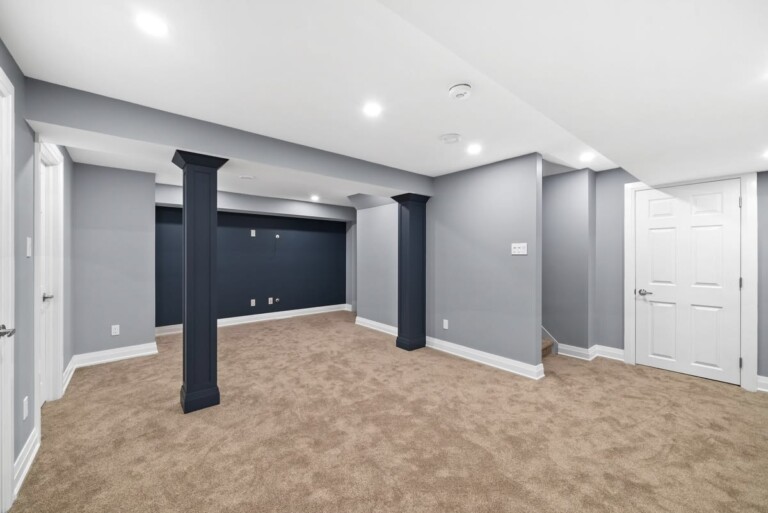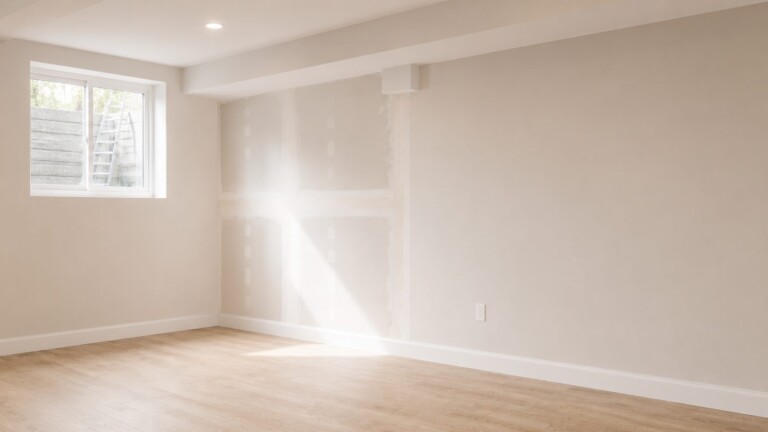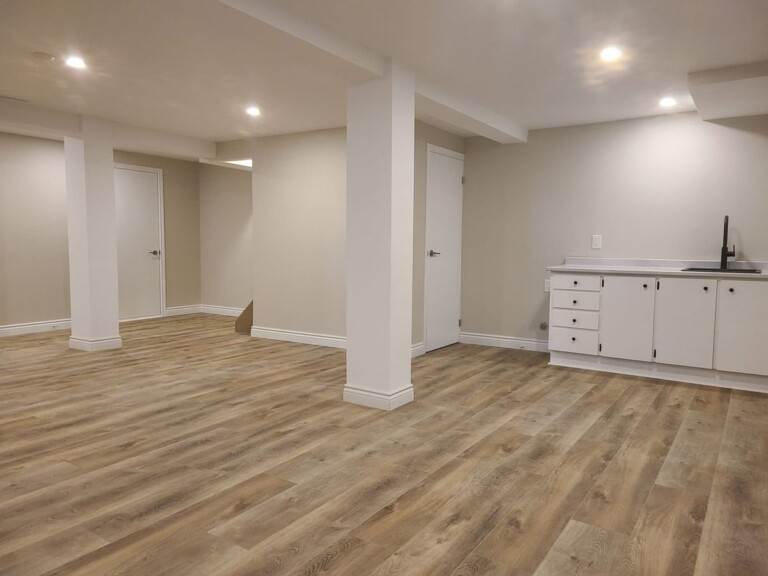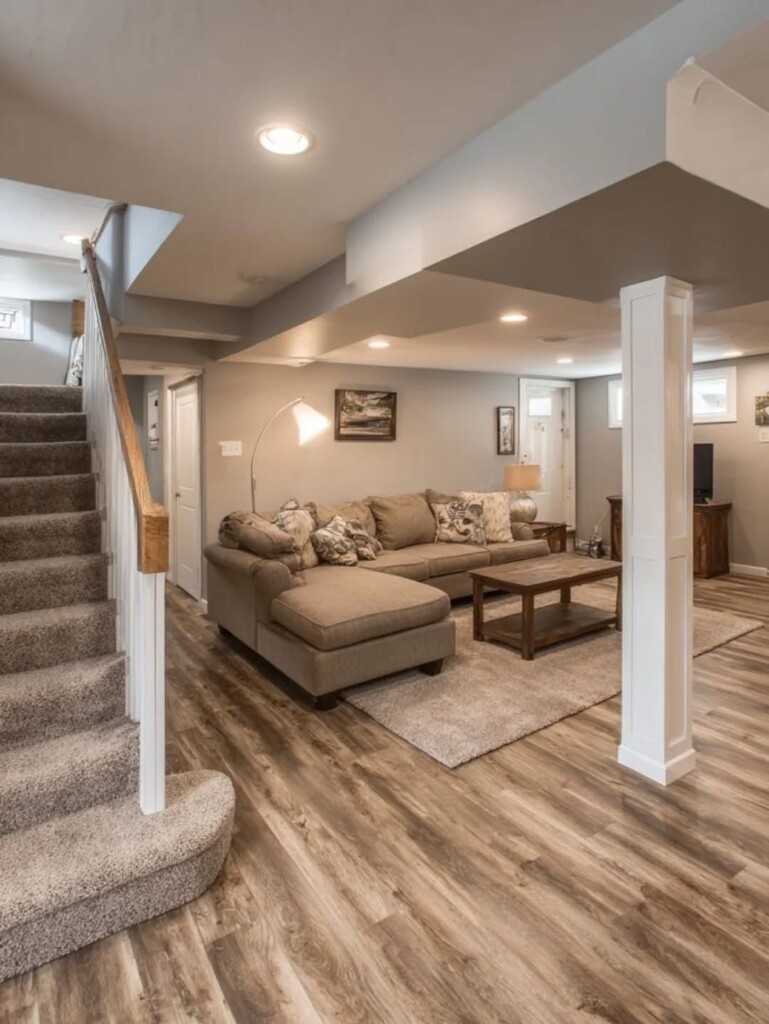
Short answer: take an 800 sq ft registered one-bedroom built as a Full Suite at $92,000–120,000. A well-finished registered one-bedroom suite rents for $2,300–2,600 a month as a typical GTA range — your city, street and finish level set the real number. That is $27,600–31,200 a year, and the simple payback on the construction cost works out to roughly three to four and a half years. That figure is before income tax, vacancies, maintenance, insurance and financing costs, rents vary by city and by year, and none of this is financial or legal advice or a guarantee — it is arithmetic on typical numbers so you can decide whether a basement apartment ROI is worth investigating for your house. Below is the same calculation for all three build packages, what moves the rent, what eats into the return, and why the legal route is the only one where the numbers are real.
Simple payback by package
The formula is the build cost divided by the annual rent. It ignores everything that comes later, which is why it is called simple, but it puts the three packages on the same footing.
| Package | Example project (turnkey, before HST) | If rent is $2,300–2,600/month (typical range) | Simple payback |
|---|---|---|---|
| Retrofit — finished basement brought to code and registered | ≈700 sq ft: $63,000–80,000 | $27,600–31,200 a year | roughly 2–3 years |
| Full Suite — unfinished basement to registered apartment | ≈800 sq ft: $92,000–120,000 | $27,600–31,200 a year | roughly 3–4.5 years |
| Suite + Entrance — full suite with its own door or walkout | ≈1,000 sq ft: $150,000–190,000 | $27,600–31,200 a year | roughly 5–7 years |
Package rates are $90–115, $115–150 and $150–190 per square foot with a typical $60,000 minimum on our legal basement apartment page; what each includes, and what it leaves out, is in our guide to legal basement apartment cost in the GTA. To run your own numbers, replace the rent with what comparable registered units on your street actually list for, and the build cost with the written quote.
What moves the rent
The typical range is wide because the units are. Without putting numbers on any of these, the factors that push a suite toward the top of its market:
- City and neighbourhood — transit, employment and school proximity matter more below grade than above it, because the tenant is usually choosing on commute.
- A separate entrance — the single biggest factor in tenant preference and the reason the Suite + Entrance package exists; a shared front door limits who will rent.
- Windows and light — enlarged windows do more than satisfy egress; a bright suite rents faster and stays rented. How windows get enlarged is in our guide to basement egress windows in Ontario.
- Parking — a dedicated spot is worth real money in Brampton and Mississauga and almost mandatory outside the subway grid in Toronto.
- In-suite laundry — a small plumbing decision at build time, a large one in the listing.
- Finish level — a durable, clean, modern finish; premium materials add cost faster than they add rent, and tenant-grade quality is the point of the Full Suite spec.
- Soundproofing — sound insulation between units is built into the Full Suite package; a tenant who hears every footstep leaves at the end of the lease.
The costs that break simple math
Simple payback is where the decision starts, not where it ends. The items below are real, vary by owner, and belong in your own spreadsheet even though we will not put numbers on them here:
- Vacancy — every turnover means weeks without rent plus the cost of finding the next tenant.
- Turnover work — a repaint between tenants is normal (see our interior painting packages), and a few drywall repairs, a deep clean and small fixes come with it.
- Insurance — a rental unit changes the home policy; tell the broker, because an unreported unit can void a claim.
- Income tax — rental income is taxable, some costs are deductible, and the accountant’s answer is the only one that counts.
- Financing — if the build is borrowed, interest is a monthly cost against the rent.
- Utilities — whether they are included or separately metered changes both the rent and the risk.
- Your time — being a landlord is a job, and the Ontario tenancy rules are the employer.
A suite that pays back in four years on paper often pays back in five or six once these are honest. It is still a strong outcome; it is just not the headline number.
Why legal, not a “cash basement”
An unregistered basement apartment cannot be legally rented as a second unit, and the money it appears to save is borrowed against a bad day: a complaint or an inspection ends the tenancy and starts a retroactive permit, an insurer can deny a claim involving the unit, and a buyer’s lawyer will price the risk into an offer. A registered unit is a unit a buyer and a lender can verify — what that is worth on resale depends on the house and the market, and we make no promise about it, but it is a fact on the listing instead of a liability in the disclosure. The full set of rules is in our guide to legal basement apartment requirements in Ontario. The build cost of doing it properly is the number in the table above; the cost of doing it improperly does not fit in a table.
The fastest payback: retrofitting a finished basement
If you already have a finished basement — especially one that has been quietly rented — the Retrofit package is where the numbers are best. The layout, flooring and most of the finishes stay; the spend goes to fire separation, interconnected alarms, egress, an electrical inspection and the drawings, permit and registration. At $63,000–80,000 for a typical 700 sq ft unit against the same rent, simple payback is roughly two to three years. It only stops being the right choice when the ceiling has to come down anyway for the rated assembly, or the kitchen and bathroom are in the wrong place for the code; then the project is really a Full Suite and should be priced as one.
Mississauga, Brampton and Toronto
- Mississauga — a mature second-unit registration process, strong tenant demand near transit and the colleges, and housing stock where most basements qualify without underpinning. See legal basement apartments in Mississauga.
- Brampton — the GTA’s most active second-unit market: large newer basements, side entrances already in place on many houses, and a city that checks parking alongside the build. See legal basement apartments in Brampton.
- Toronto — the highest demand and the hardest houses: low ceilings that need underpinning, narrow lots where a walkout is difficult, and street parking. Build costs sit at the top of each band, which lengthens payback even where rents run higher. See legal basement apartments in Toronto.
How to run your own case
Five inputs decide it:
- Suite area in square feet — the finished floor area of the unit.
- Package — Retrofit, Full Suite or Suite + Entrance, from your starting point.
- Rent benchmark — what registered one-bedrooms near you list for, not the top of anyone’s range.
- Vacancy allowance — a month a year is a common planning assumption; pick your own.
- Ongoing costs — insurance, maintenance, utilities if included, financing.
Rent times twelve, less vacancy and costs, divided into the build cost, gives a payback you can defend. We can give you the build side exactly: send us the basement plan, the ceiling height at the lowest point and photos of the windows, and the written quote puts a real number where the cost range is now. IntraBuild designs, permits, builds and registers second units across Mississauga, Brampton, Toronto and the GTA: one insured crew, a written price, no travel fee. Get a legal basement apartment quote or call (647) 558-8723.
Frequently asked questions
How much rent can a basement apartment earn in the GTA?
A well-finished registered one-bedroom suite rents for $2,300–2,600 a month as a typical GTA range; your city, street and finish level set the real number. Check current listings for registered units near you before you plan on any figure.
How long does a legal basement apartment take to pay off?
On simple payback — build cost divided by annual rent at the typical range — roughly two to three years for a Retrofit, three to four and a half for a Full Suite and five to seven for a Suite + Entrance. All before taxes, vacancy, maintenance, insurance and financing, and not a guarantee.
Is a basement apartment worth it in Brampton or Mississauga?
Both cities have established registration processes, housing stock that usually qualifies and steady tenant demand, which is why they are where most of our second units are built. Whether it is worth it for your house comes down to the five inputs above and a written quote.
Does a legal suite increase home value?
A registered unit is something a buyer and a lender can verify, and an unregistered one is something they discount. How much a registered suite adds on your street is a question for a local agent; we make no promise about resale value.
What are the ongoing costs?
Vacancy between tenants, a repaint and small repairs at turnover, the change to your home insurance, income tax on the rent, utilities if they are included, and interest if the build is financed. None of them is large on its own; together they are the difference between the simple payback and the real one.