Short answer: there are three ways to get rid of a popcorn ceiling, and popcorn ceiling removal cost depends on which one your ceiling needs. Scraping the texture off and refinishing is quoted on site per square foot of ceiling; the number depends on whether the texture was painted, its age and what finish you want afterward. Skim-coating over the texture to a Level 5 finish runs $4.25–5.75 per square foot. A new drywall ceiling over or in place of the old one runs $3.00–4.25 per square foot at Level 4, with ceilings at the top of that band. All before HST. One thing comes before any of them in an Ontario house built before about 1990: an asbestos test.
| Method | When it makes sense | Cost (before HST) |
|---|---|---|
| Scrape and refinish | Unpainted texture on sound drywall; asbestos test negative | Quoted on site per sq ft of ceiling |
| Skim-coat over (Level 5) | Painted texture, fragile board, or a flat ceiling that just needs a smooth finish | $4.25–5.75 per sq ft |
| New drywall ceiling (Level 4) | Cracked, sagging or water-damaged ceiling; encapsulating an asbestos-positive texture | $3.00–4.25 per sq ft, ceilings at the top of the band |
What a popcorn ceiling is, and why people remove it
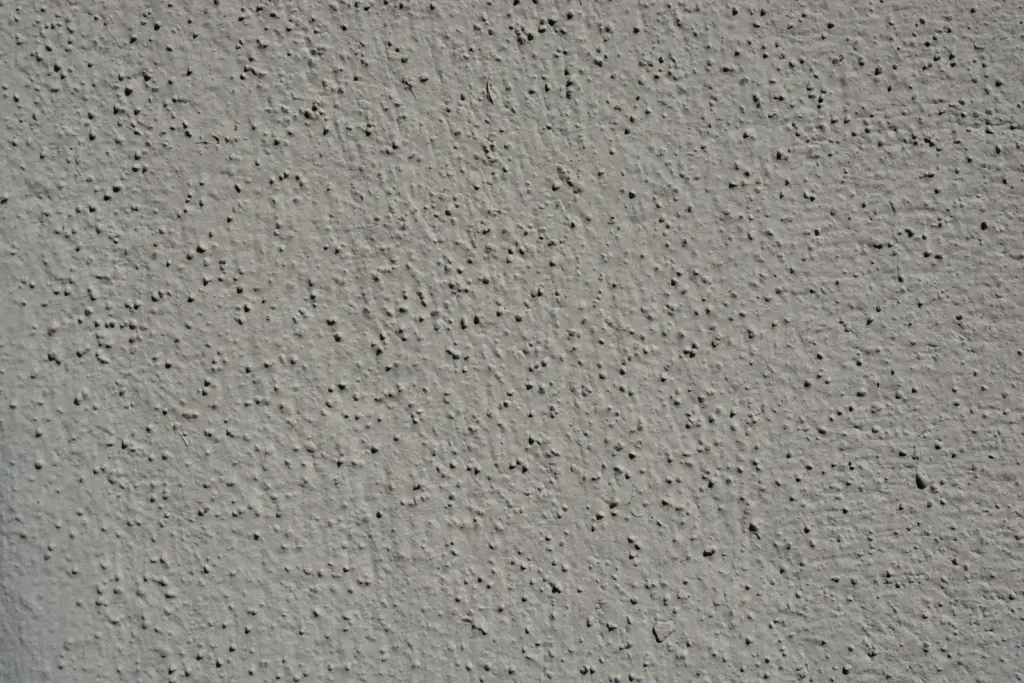
Popcorn — also called stipple, stucco or acoustic texture — is a sprayed or rolled compound that hid taping flaws and saved builders a finishing step. It was standard in Ontario houses and apartment buildings from the 1960s through the early 1990s. People remove it for practical reasons more than fashion: it traps dust and cobwebs, it cannot be wiped, it cracks and sheds along seams, it makes pot lights and any lighting look harsh, and a smooth ceiling is one of the first things buyers notice in a listing photo. It is also nearly impossible to repair invisibly, so one water stain tends to turn into a whole-ceiling decision.
Before anything else: asbestos
Textured ceiling compound sold in Canada could contain asbestos into the late 1980s, and older stock was used after that. In practice, any textured ceiling in a house or building from before about 1990 should be treated as suspect until a lab says otherwise. The test is simple: a small sample from an inconspicuous spot — a closet ceiling, behind a light fixture — goes to an accredited lab, and the result comes back in days. Do this before anyone scrapes, sands or even drills a pot-light hole in the texture, because disturbing asbestos-containing material is what makes it dangerous.
If the result is negative, any of the three methods below is on the table. If it is positive, removal is abatement work for a licensed asbestos contractor with containment, negative air and proper disposal — that is not a service we provide, and no drywall or painting contractor should offer to scrape it. What we can do after abatement, or instead of it, is the finishing: a new ceiling installed over an encapsulated surface, or the skim and paint once a licensed crew has removed the texture.
Method 1: scrape and refinish
This is what most people picture. The room is emptied or fully draped, the floor and walls are sheeted, and the texture is wetted with a garden sprayer so it softens. It is then scraped off with a wide blade down to the drywall. What comes next depends on what the scraping reveals: the original taping was hidden under the texture and is usually rough, so seams are re-coated, gouges from the scraper are filled, and the whole ceiling gets sanded and primed before paint.
Unpainted texture soaks up water and comes off cleanly; this is the easy case. Painted texture is a different job. Paint seals the popcorn so water cannot soften it, scraping is slow and tears the paper face of the drywall, and the ceiling usually needs a skim coat afterward to look right. Many painted ceilings end up costing more to scrape and skim than to skim over directly, which is why scraping is quoted on site rather than from a flat rate: the age of the texture, whether it has been painted, and the finish you want afterward decide the number.
Count on a full day per average room for scraping and a second day or more for the refinishing coats, with drying time between them. It is a very wet, very messy process; anything left in the room will be covered in it.
Method 2: skim-coat over the texture (Level 5)
Instead of removing the popcorn, the texture is knocked down — the high peaks scraped lightly — and then buried under two or three full coats of joint compound, sanded flat and primed. This is a Level 5 finish, the same full-skim standard used under raking light and dark paint, and it prices at $4.25–5.75 per square foot on our drywall installation pricing.
Skim-coating is the better choice when the texture is painted, when the drywall underneath is fragile, and when the ceiling is otherwise sound and flat. It creates far less mess than scraping and the result is a smoother ceiling than most scrape jobs achieve, because the entire surface is refinished rather than just the damage. It adds a small amount of weight and thickness, which matters only where crown moulding or ceiling fixtures sit tight to the surface.
Method 3: a new drywall ceiling
When the ceiling is cracked, water-damaged, sagging between joists or has been patched too many times, neither scraping nor skimming fixes the underlying problem. The options are a new layer of board screwed up through the old ceiling into the joists, or full removal and replacement. Both are priced as new drywall at Level 4, $3.00–4.25 per square foot, with ceilings sitting at the top of the band because overhead hanging and taping are slower than wall work.
An overlay is the usual route when the old ceiling is asbestos-positive but intact: the texture stays sealed in place and the new board encapsulates it. Full replacement is the route when there is water damage, when insulation or wiring above needs work, or when the ceiling height can afford to lose the old layer. Either way the result is a brand-new, flat ceiling, and it is often the cheapest of the three methods for a large open area.
What moves the price
Painted texture
The single biggest factor for scraping. Unpainted popcorn is a scrape; painted popcorn is a scrape plus a skim, or a skim on its own.
Ceiling height and pitch
Nine- and ten-foot ceilings, stairwells and vaulted living rooms need scaffolding and slow every step. Standard eight-foot ceilings are the baseline.
Pot lights, vents and fixtures
Every opening is an edge to cut in and finish around. If you are planning pot lights, have them roughed in before the ceiling is refinished, not after.
Furniture and access
An empty room is faster and cleaner. Whatever cannot leave the room is wrapped, and that time is on the quote.
Painting afterward
A refinished ceiling is primed, not painted. A Complete interior painting job includes ceilings, and doing the walls at the same time hides the inevitable scuffs from the ceiling work.
Patching instead of removing
If only one section is damaged and you can live with the texture, a patch at the Water & Ceiling tier on our drywall repair pricing ($350–650 per repair, $200 minimum) blends new texture into the old. It never disappears completely, which is why most owners end up removing the whole ceiling eventually.
Where popcorn ceilings are in the GTA
- Toronto — 1970s and 1980s condo towers and rental apartments, where the texture is often on concrete rather than drywall and building rules govern hours, elevators and dust control. See drywall installation in Toronto.
- Mississauga — the largest concentration of 1970s–1990s detached and semi-detached houses in the region, most with popcorn on every ceiling and many now on their second owner. See drywall installation in Mississauga.
- Oakville and Brampton — same era of subdivisions; Oakville homes tend toward higher ceilings and a Level 5 finish afterward. See drywall installation in Oakville.
- Aurora, Newmarket and York Region — 1980s builds where the ceiling job is usually paired with a whole-house repaint; see interior painting in Aurora.
How to get an accurate quote
- Measure the ceiling area of each room — length by width — and note the ceiling height.
- Say when the house was built, and whether you have a lab result for asbestos. If not, get the test first; the quote depends on it.
- Say whether the texture has ever been painted. If you are not sure, spray a corner with water: unpainted popcorn softens in a minute, painted popcorn does not.
- Send photos of any cracks, stains or sagging, and say whether you want the ceiling painted afterward and whether pot lights are planned.
IntraBuild quotes ceiling work this way across Toronto, the GTA and Southern Ontario: one insured crew, a written price with the method spelled out, no travel fee. Get a ceiling quote or call (647) 558-8723.
Frequently asked questions
Can I remove a popcorn ceiling myself?
Only after a negative asbestos test, and only if the texture is unpainted. The scraping is not skilled work; the refinishing is. Most DIY scrape jobs end with a ceiling that needs a professional skim coat to hide the scraper marks and exposed seams, which is the part you were paying for in the first place.
Does a popcorn ceiling contain asbestos?
It might, in any Ontario building from before about 1990. The only way to know is a lab test on a sample. If it is positive, removal is licensed abatement work; encapsulating it under a new drywall ceiling is the usual alternative.
Scrape or skim-coat — which is cheaper?
For unpainted texture on sound drywall, scraping is usually cheaper. For painted texture, skim-coating at $4.25–5.75 per square foot is often the same price or less than scraping and then skimming anyway, with far less mess. A site visit settles it.
How long does popcorn ceiling removal take per room?
Scraping: about a day per room, plus a day or two for refinishing coats and drying. Skim-coating: two to three days including drying between coats. A new drywall ceiling: similar, with taping coats spread over consecutive days. Painting adds a day.
Do you paint the ceiling afterward?
Every method leaves the ceiling primed. Painting is quoted separately as part of a Complete interior painting job, which includes ceilings, so you can paint the ceiling alone or the whole room at once.