
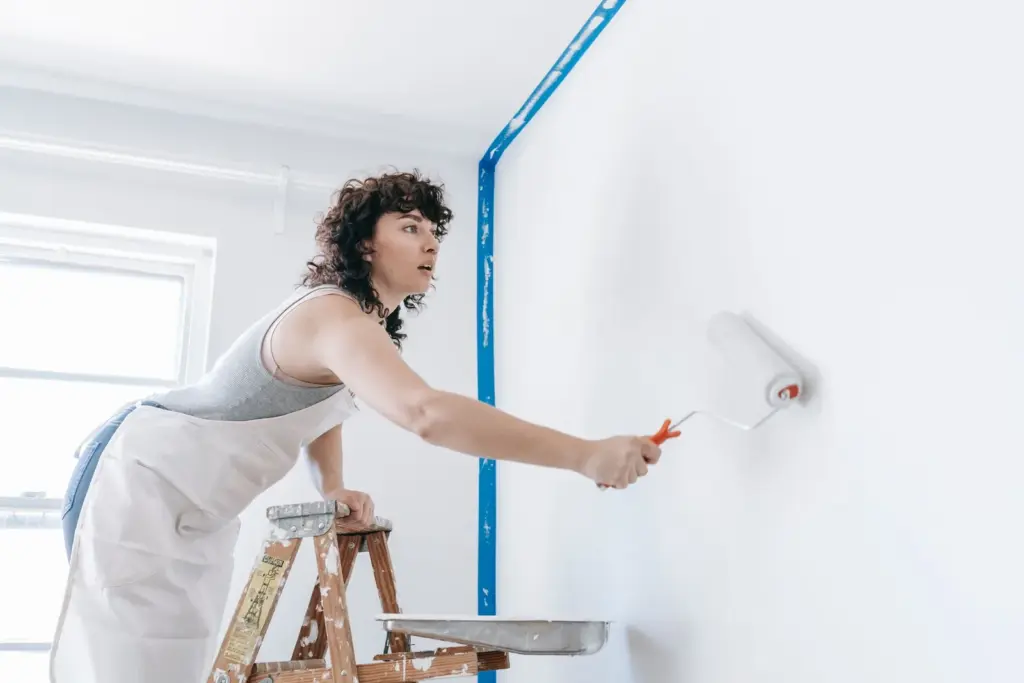
Short answer: how long does it take to paint a house interior? For a two-painter crew, a bedroom is typically a day, a living room one to two, and the whole interior of a three-bedroom house roughly four to seven days. Ceilings, trim and doors add time; so do repairs, dark colours and a home you are living in while the work happens. Those are industry-typical figures. Your actual schedule comes with the written quote — IntraBuild sends both within 48 hours, so the dates are agreed before a drop sheet is laid.
| Area | Typical time, two-painter crew | What is included |
|---|---|---|
| Bedroom | 1 day | Walls and ceiling, two coats, basic prep |
| Living or dining room | 1–2 days | Larger area, more cutting-in, often trim |
| Kitchen (cabinets excluded) | 1–2 days | Less wall, more edges around cabinets and backsplash |
| Bathroom | ½–1 day | Small, slow, every edge is a fixture |
| Hallway and stairwell | 1–2 days | Ladder or scaffold work, tall walls |
| Whole 3-bedroom house interior | roughly 4–7 days | Walls and ceilings; trim and doors push toward the top |
All of these assume walls in reasonable shape and normal ceiling heights. The rest of this article explains where the days go and what moves them.
What a painting day is made of
A room does not take a day because rolling is slow; rolling is the fast part. The sequence for one room is: move and cover furniture and floors, prep — fill nail holes, sand, caulk gaps, spot-prime — cut in the edges by brush, roll the first coat, wait for it to dry, cut in and roll the second coat, then remove tape and put the room back. The drying wait in the middle is why a crew works two or three rooms at once: while one dries, the next gets prepped. Two coats is the standard on every tier for a reason — one coat rarely covers evenly, and the second is what gives the colour its depth and the surface its washability. Premium paint lines add a tinted primer under dark shades; Signature projects begin with an in-depth colour consultation. The packages are on our interior painting page.
Room by room
Bedroom: about a day
Four walls, a ceiling, a closet and a door. With basic prep and two coats, a typical bedroom is a day’s work, and a crew doing a whole floor will run two or three bedrooms in parallel.
Living and dining rooms: one to two days
Bigger walls, more trim, often a taller ceiling and more furniture to move. If the ceiling is being painted too, it goes first, before the walls.
Kitchen: one to two days, cabinets not included
Less wall area than you expect, but more edges — around cabinets, the backsplash, the range hood — and grease that has to be washed off before paint will stick. Painting the cabinets themselves is a separate job on a separate schedule.
Bathroom: half a day to a day
Tiny, but every square foot has a fixture, mirror or tile edge next to it, and the ceiling usually needs a moisture-resistant paint. A powder room can be done in a morning.
Hallway and stairwell: one to two days
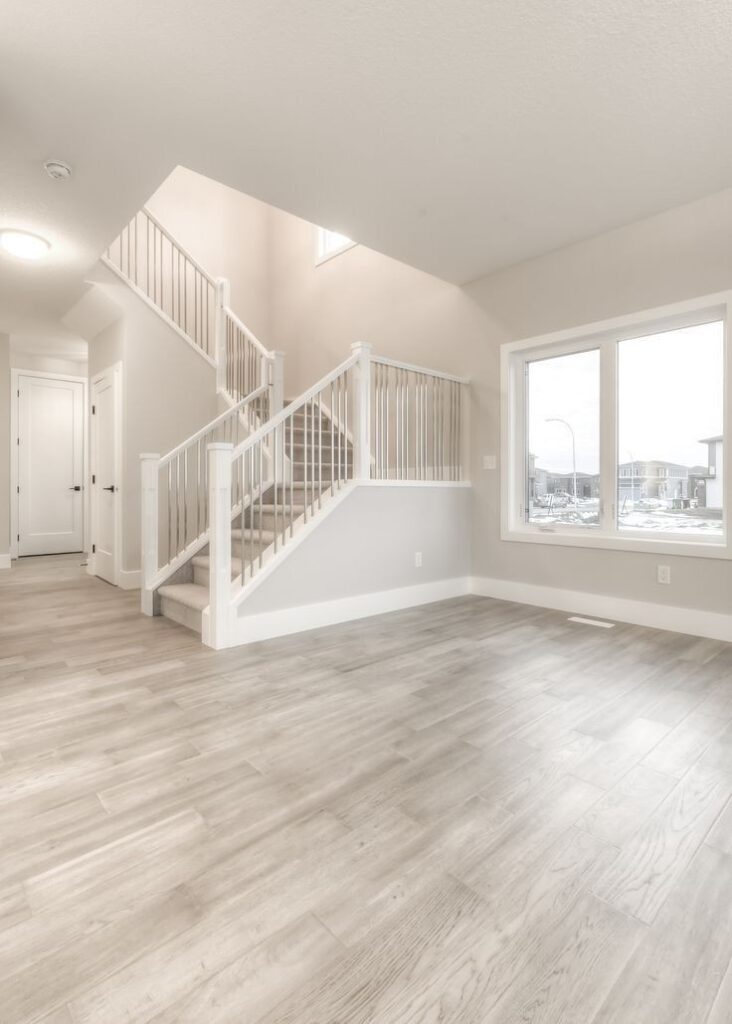
Very little floor, a great deal of wall. A two-storey stairwell needs a ladder or a scaffold and slows every step; it is often the last thing painted because everything else has to pass through it.
Whole house: four to seven days for a three-bedroom
Walls and ceilings throughout, sequenced so rooms dry while others are prepped. Adding trim and doors everywhere pushes toward the top of the range, because trim is slow and enamel dries overnight between coats. What that costs is in our guide to interior painting cost in Ontario.
What adds days
Prep and repairs
Basic prep — nail holes, light sanding, caulking — is in every tier. Cracks, door-knob holes, water stains and old wallpaper are repairs, and they need compound that dries between coats before the painting can start. A round of Patch-tier repairs at $120–200 each usually adds a day ahead of the paint; see our drywall repair page. Doing repairs and paint as one job with one crew avoids a gap between the two.
Dark and saturated colours
Deep colours, and switching from a dark colour back to light, often need a third coat or a tinted primer. Each extra coat is another drying cycle.
Ceilings
A ceiling adds roughly half a room’s worth of time: it is painted first, and the walls wait until it is dry.
Trim, doors and baseboards
Trim is the slowest surface in the house — sanding, priming over old oil-based paint, and a harder enamel that dries overnight between coats. A house with painted trim and six-panel doors throughout can spend a third of the schedule on trim alone.
Textured ceilings
A popcorn or stippled ceiling drinks paint, needs a thick roller and takes longer to cover evenly. If the plan is to remove the texture rather than paint it, that is its own job before painting — see our guide to popcorn ceiling removal.
High ceilings and open stairwells
Anything over nine feet means ladders or scaffolding, which slows cutting-in and moving between rooms.
A home you are living in
Working around a family means room by room, with furniture shifted and shifted back, rather than an empty house rolled end to end. Plan on the top of each range.
Condo logistics
Elevator bookings and building hours set when a crew can start and stop; a two-day job in a house is often three in a downtown tower. The rules and typical timelines are in our guide to condo painting in Toronto.
Drying versus curing
Latex wall paint is typically dry to the touch in an hour or two and ready for a second coat in two to four hours, which is why two coats fit in one day. Trim enamel is slower and usually gets an overnight between coats. But “dry” is not “cured”. Paint keeps hardening for weeks as the last of the water and solvents leave the film. Typical guidance:
- Furniture back against the walls: after about 24 hours. Leave a small gap for the first few days so nothing sticks.
- Pictures and shelves rehung: a few days, to avoid marking soft paint.
- Washing or scrubbing the walls: wait for full cure, typically two to four weeks. Wiping a scuff off a week-old wall can lift the paint.
- Sleeping in the room: with a low-VOC paint and a window cracked, the same night is fine for most people; sensitive noses may prefer a night away.
Staying home or moving out?
Most families stay. The crew works one floor or a few rooms at a time, closes each area off with plastic where dust is involved, and hands rooms back the same evening they are finished — bedrooms first so everyone has somewhere to sleep, kitchen last so it is out of service for the shortest time. An empty house is faster and cheaper because nothing gets moved twice, so if you are between tenants, or can time the job to a holiday, the schedule shortens. Either way, the order of rooms is agreed with the quote.
Painting before a sale or a new tenant
When a listing date or a move-in date is fixed, sequence works backward from it. Repairs first, then ceilings, then walls, then trim, then a day for the paint to harden before photographs, staging or furniture. A whole-house neutral refresh on an empty three-bedroom is at the short end of the four-to-seven-day range; book it before the stager and the cleaner, not after. Landlords across the west GTA — interior painting in Mississauga and Oakville — usually run this between tenancies, and homeowners in Aurora and York Region most often before listing in spring.
How to get a schedule, not a guess
Send the rooms, the floor area, photos and any dates you are working toward. The written quote arrives within 48 hours with the price and the schedule together — start date, sequence and finish — so the timeline is agreed before a drop sheet is laid. IntraBuild paints across Toronto, the GTA and Southern Ontario with one insured crew, a written price and no travel fee. Get an interior painting quote or call (647) 558-8723.
Frequently asked questions
How long does it take to paint one bedroom?
About a day for a two-painter crew: prep, two coats on walls and ceiling, and the room put back. Trim and doors or a dark colour can push it into a second morning.
How long between coats?
Typically two to four hours for latex wall paint, overnight for trim enamel. Rushing the second coat over a first that is still soft is how roller marks and peeling start.
Can I sleep in a freshly painted room?
With low-VOC paint and some ventilation, most people can the same night. If you are sensitive to smell, give it a night. Keep furniture off the walls for the first day.
How long does it take to paint a 2,000 sq ft house interior?
Roughly four to seven days for walls and ceilings throughout, longer with trim and doors everywhere, dark colours or an occupied home. The schedule on your written quote is the real answer for your house.
Do you work weekends or evenings?
Ask when you request the quote. Scheduling is set per project, and buildings with contractor hours — most condos — decide it for us. We will tell you what is possible for your dates before the job is booked.